The short answer
Retailers should not choose a kids ATV by voltage or a simple age label alone. Build the range from the intended rider profile, physical fit, developmental ability, supervision, controls, speed behavior, product dimensions, load assumptions, surface, battery and drive system, retail channel, packaging, compliance evidence, and after-sales capability. Validate every claim on the exact production-representative configuration.
Searches such as “ATV for a 3 year old,” “kids ATV for grass,” and “12V kids four wheeler” appear to ask for one product recommendation. For a retailer or distributor, they reveal a larger range-planning problem: customers use age, voltage, terrain, size, and features as shortcuts, while the actual product decision depends on the complete child-product-environment relationship.
This guide shows how to turn those searches into a responsible assortment. It does not assign universal ages, loads, speeds, or surfaces to voltage classes. The finished product’s age grading, claims, instructions, warnings, documentation, and marketing must be established for the exact model and destination market with appropriate expert review.
1. Give every kids ATV platform a clear job in the range
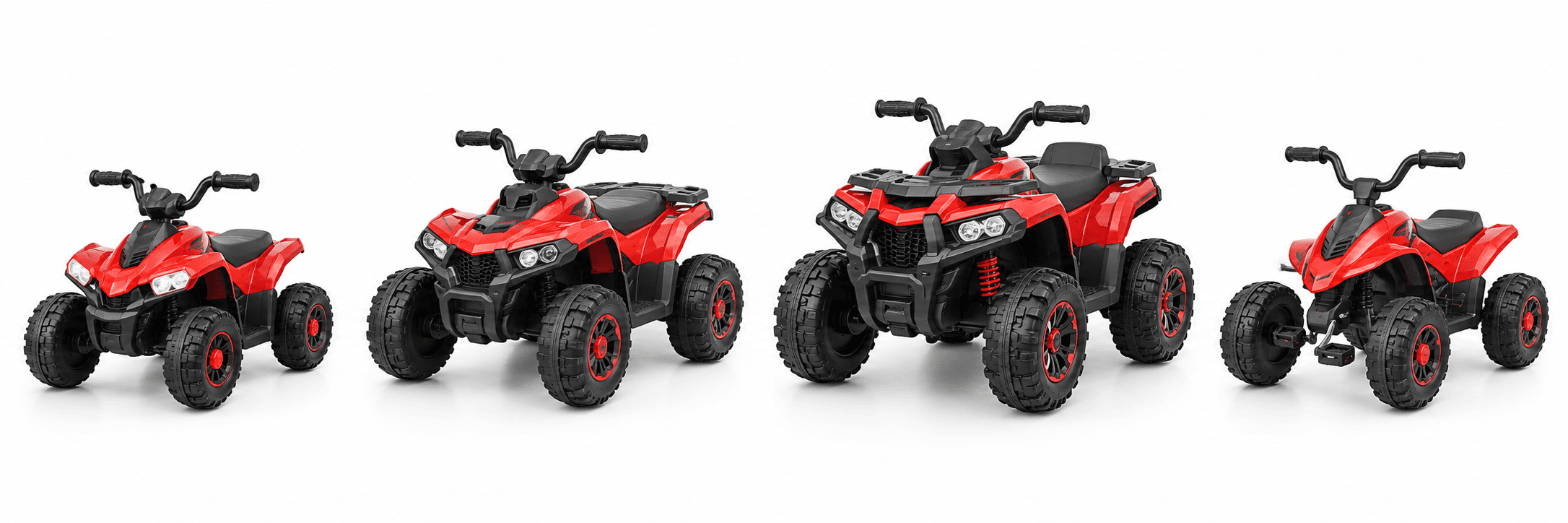
A range becomes confusing when several models differ only in styling or unsupported feature claims. Define the commercial job of each platform: compact entry, core everyday, larger premium, battery-free pedal, feature-led gift, or another evidence-based role. Link that job to a target channel, customer problem, price tier, physical footprint, packaging route, and service expectation.
Begin with demand signals from search, retail questions, return reasons, competitor assortments, and channel limitations. Then write a range brief that describes the intended rider and environment without choosing a voltage first. This prevents the electrical label from becoming a substitute for product fit.
| Range role | Customer job | Buyer evidence |
|---|---|---|
| Compact entry platform | Simple first ride-on experience and efficient footprint | Physical fit, controls, stable low-complexity specification, pack-out |
| Core electric ATV | Balanced feature set for the main assortment | Drive layout, modes, wheels, battery, channel price, sample test |
| Larger premium platform | More substantial form and richer controlled features | Dimensions, mass, controls, performance conditions, logistics, service |
| Pedal alternative | Battery-free play and different maintenance profile | Pedal ergonomics, gearing, steering, structure, packaging |
Compare the current CubRover product platforms and use the 6V, 12V, and 24V buyer guide to understand why voltage is a platform filter rather than a universal age or quality grade.
2. Replace age shortcuts with structured rider and product fit
Age grading is a product-development and compliance decision, not a keyword insertion exercise. Consider the physical, cognitive, and motor abilities associated with the intended audience; product dimensions and controls; foreseeable use; packaging and promotional representation; small parts and other applicable hazards; and the relevant market framework.
The U.S. CPSC explains that children’s-product determinations consider the manufacturer’s statement, packaging and promotion, consumer recognition, and the Commission’s Age Determination Guidelines. The CPSC also emphasizes choosing toys that match a child’s interests and abilities. Destination-market specialists should review the exact model.
For sample review, examine seat height and usable seating area, foot placement, steering reach and effort, control access, entry and exit, product stability, restraint or support features where applicable, visibility, speed modes, stopping behavior, adult supervision, and the consequences of misuse. A label such as “3+” does not answer these questions.
Record the reason behind the proposed rider profile
- Product dimensions and posture measurements from the representative sample.
- Control force, reach, sequence, mode access, and adult-assistance expectations.
- Vehicle behavior under defined loads, surfaces, battery states, and operating modes.
- Developmental and foreseeable-use review appropriate to the intended audience.
- Applicable safety, labeling, instruction, testing, and market documentation review.
- Consistent age and use language across product, carton, manual, listing, and advertising.
3. Compare kids ATVs for grass, pavement, and indoor surfaces responsibly
Surface changes traction, vibration, steering effort, current draw, speed, stopping, noise, wheel wear, and stability. A product that starts easily on smooth pavement may behave differently on grass. An indoor product may need lower noise, compact turning, clean wheels, and protection for flooring. “All terrain” styling is not evidence of all-terrain capability.
| Surface | Potential buyer priorities | What to verify |
|---|---|---|
| Smooth pavement | Predictable rolling, turning, stopping, wheel noise and wear | Tread, wheel material, speed modes, braking or pedal-release response |
| Short dry grass | Starting load, traction, current demand, steering, thermal behavior | Exact load, grass condition, battery state, run duration, drivetrain temperature |
| Indoor floor | Compact size, noise, turning, surface marking, controllability | Wheel construction, minimum space, speed behavior, supervision and exclusions |
| Compacted path | Vibration, fasteners, wheel contact, steering and durability | Defined path condition; do not generalize to rough off-road use |
Define the intended surface narrowly enough to test. Record grass length and moisture, pavement type, path condition, gradient, load, battery state, ambient conditions, duration, and observation method. Product pages should use the same conditions and exclusions rather than converting one factory video into a broad terrain claim.
Wheel material and drivetrain must be considered together. Greater grip can increase drivetrain load. Larger wheels alter effective gearing. More motors can increase electrical demand. Suspension can change ride feel but does not make the product suitable for uncontrolled rough terrain.
See the wheel, motor, 4WD, suspension, and drive-system guide for the component-level comparison and factory test questions.
4. Design the assortment for retail stores, online sellers, and distributors
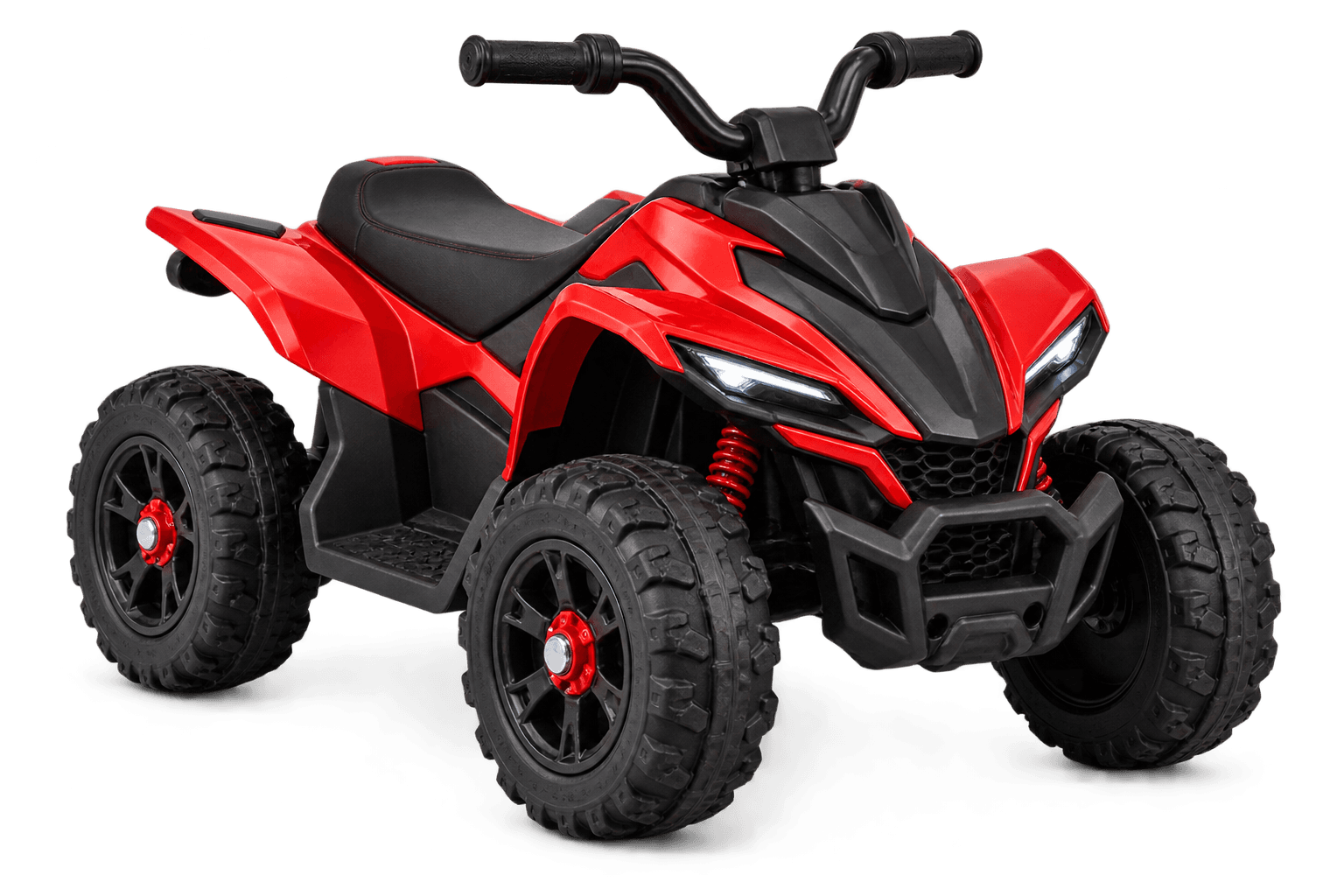
The same product can create different operational demands by channel. A store can display an assembled unit and explain fit, but needs floor space, safe demonstration rules, replenishment, and clear comparison signage. An online seller needs accurate images, dimensions, assembly content, resilient single-carton packaging, responsive support, and disciplined listing control.
A distributor may serve several retailers and markets, making model continuity, spare parts, documentation, mixed-order planning, translations, and change notification especially important. Marketplaces may apply carton, dangerous-goods, product-compliance, return, or content rules beyond the product specification. Confirm current platform and carrier requirements directly.
| Channel | Commercial priority | Product and operation check |
|---|---|---|
| Physical retail | Clear step-up story and display conversion | Assembled footprint, comparison claims, stock handling, staff guidance |
| E-commerce | Low damage and low assembly confusion | Carton resilience, installation content, imagery, parts, return economics |
| Marketplace | Search visibility and policy consistency | Listing accuracy, identifiers, documents, fulfillment limits, claim control |
| Distributor/dealer | Range continuity and technical support | Model codes, spare parts, manuals, training, change notices, mixed orders |
| Promotional/private label | Brand impact at controlled cost | Customization risk, MOQ, sample approval, artwork and packaging |
Build one master product-information record and adapt presentation by channel without changing facts. Dimensions, battery, charger, included parts, required assembly, age grading, intended use, warnings, and performance conditions should remain consistent everywhere.
5. Balance platform coverage with assortment complexity
Every additional body, color, voltage, motor arrangement, wheel, feature pack, carton, language, and spare-part set creates complexity. It can divide order quantities, slow artwork, increase component inventory, add inspection combinations, dilute service stock, and make listings harder to maintain. Variety earns its place only when it serves a distinct customer or channel job.
Calculate contribution at the program level. Include samples, artwork, tooling where applicable, testing, inspection, packaging, freight, duty, warehouse cube, platform fees, assembly support, damage, return, warranty, spare parts, and markdown exposure. A low ex-factory price can be offset by a large carton or poor after-sales fit.
Use a controlled opening assortment
- Choose one core platform with the broadest evidence-based channel fit.
- Add an entry or premium platform only if it creates a clear step in size, experience, or value.
- Limit initial colors and feature combinations to protect MOQ, inspection, and replenishment.
- Share components or service parts where engineering approval confirms compatibility.
- Set a launch review date and criteria for expanding, correcting, or removing a variant.
- Keep sufficient differentiation so products do not compete only on price.
6. Validate samples and claims before creating the listing
A sample review should reproduce the questions customers will ask. Measure dimensions, weight, seating and control fit, turning space, assembly time, charger and battery identity, functions, modes, wheel construction, drive layout, noise, and pack-out. Operate under defined loads and surfaces with the intended supervision and safety controls.
Separate facts, conditional observations, and marketing language. “Dual motor” may be a component fact. Speed and runtime depend on conditions. “Suitable for grass” requires a defined grass condition and test basis. “Beginner” or an age claim requires product and developmental review. “Safe” should not be used as an absolute promise.
| Claim area | Evidence to keep | Listing discipline |
|---|---|---|
| Dimensions and load | Approved drawing and production measurement | State units, conditions, and exact model |
| Battery and motor | Controlled BOM, labels, supplier specifications | Avoid converting ratings into unsupported performance |
| Speed or runtime | Method, load, surface, battery state, result range | Disclose conditions; avoid one universal number |
| Surface use | Defined test surface and observations | Name limits and exclusions |
| Age and ability | Age-grading and foreseeable-use review | Keep packaging, manual, and listing consistent |
| Compliance | Exact model reports and required records | Do not imply a logo covers every market or variant |
Freeze the approved listing facts with the production specification. If the factory changes a motor, battery, controller, wheel, software behavior, carton, or instruction, review the claim file before replenishment goes live.
7. Reduce returns with packaging, installation, and product content
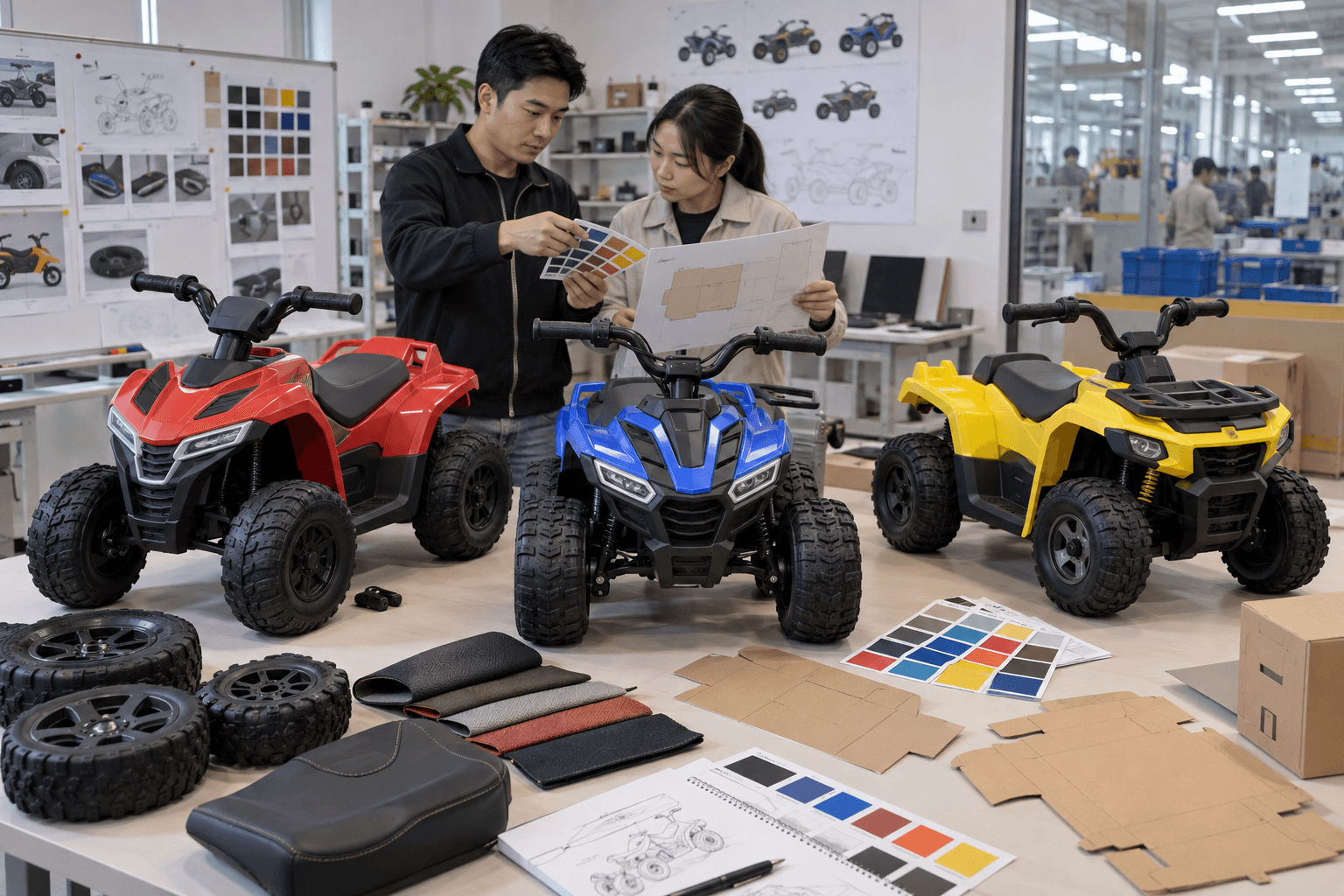
Many negative experiences begin before the first ride: carton damage, scuffed surfaces, a hidden charger, unclear hardware, disconnected shipping plug, confusing handlebar installation, or an incorrect product expectation. Packaging and content should prepare the customer for the product that arrives.
Show overall dimensions, assembled space, carton size and weight where useful, included parts, assembly steps, charging preparation, supervision, intended surface, exclusions, and required protective practices. Use real photos of controls, connectors, wheels, labels, and accessories. Make variant differences obvious so reviews for one model are not misapplied to another.
The kids ATV packaging and inspection guide covers pack-out validation, installation preparation, shipment sampling, and loading. The after-sales guide explains how model identity and service documentation reduce repeat contacts.
Monitor return reasons after launch. “Too small,” “too slow,” “not suitable for grass,” “battery not charging,” and “difficult assembly” may reflect product, listing, pack-out, instruction, service, or expectation gaps. Classify the evidence before changing the product.
8. Launch, measure, and expand the range from evidence
Pilot orders and controlled listings allow the buyer to learn before multiplying variants. Track impressions and conversion where available, but also capture damage, assembly contacts, charging questions, verified defects, returns, review themes, warranty cost, part usage, and replenishment time by model and batch.
| Area | Evidence | Decision question |
|---|---|---|
| Customer fit | Questions, reviews, size and use feedback | Is the intended rider and surface clear? |
| Commercial fit | Conversion, margin, inventory, markdown | Does the platform earn its range role? |
| Operational fit | Damage, assembly, support, return handling | Can the channel deliver it consistently? |
| Product fit | Inspection, defects, performance observations | Does production match the approved claim file? |
| Service fit | Warranty, parts, response and repeat contacts | Can the installed base be supported? |
| Supplier fit | Lead time, changes, CAPA, documentation | Can the program scale without losing control? |
Expand when the next model answers a demonstrated customer need and the organization can support its product file, inventory, packaging, content, compliance, and service. Remove or correct a model when its role remains unclear or its operational cost repeatedly exceeds the value it adds.
Conclusion
A professional kids ATV range is not a collection of voltage badges and colors. It is a set of controlled platforms with distinct jobs. Define rider and channel needs, assess physical and developmental fit, test intended surfaces under recorded conditions, limit complexity, validate every claim, and learn from launch data. The result is easier for customers to choose and easier for buyers to source, ship, support, and improve.
Frequently asked questions
What age is a kids electric ATV for?
There is no universal age based on voltage or body style. Age grading should consider the exact product, physical and developmental fit, controls, foreseeable use, marketing, instructions, test evidence, and destination-market requirements.
Is a 12V kids ATV suitable for grass?
Some configurations may operate on defined short, dry grass, but the answer depends on load, motors, gearing, wheels, battery, controller, grass condition, gradient, and test result. Verify the exact production configuration and state conditions clearly.
What is the best kids ATV for a retail store?
The best platform fits the store’s customer, display space, price architecture, stock handling, support capability, and evidence requirements. A coherent core model is often more valuable than many overlapping variants.
What should online sellers check before listing a kids ATV?
Confirm exact specifications, age and use language, dimensions, assembly, battery and charger, controls, performance conditions, packaging, identifiers, documents, fulfillment limits, spare parts, and return handling.
How many kids ATV models should a new distributor launch?
Start with the smallest range that covers distinct customer jobs and can be supported operationally. Many buyers validate one core platform and one clear entry or premium step before adding colors and features.
Can product claims from a sample be used for every production variant?
Not automatically. Confirm whether components, software, load, surface, packaging, and other relevant conditions match. Review claims whenever the production specification changes.
Build a range your customers can understand
Tell CubRover your destination markets, sales channels, rider profiles, intended surfaces, price tiers, target volume, and service model. We will help structure a focused platform comparison.
Get a Quote