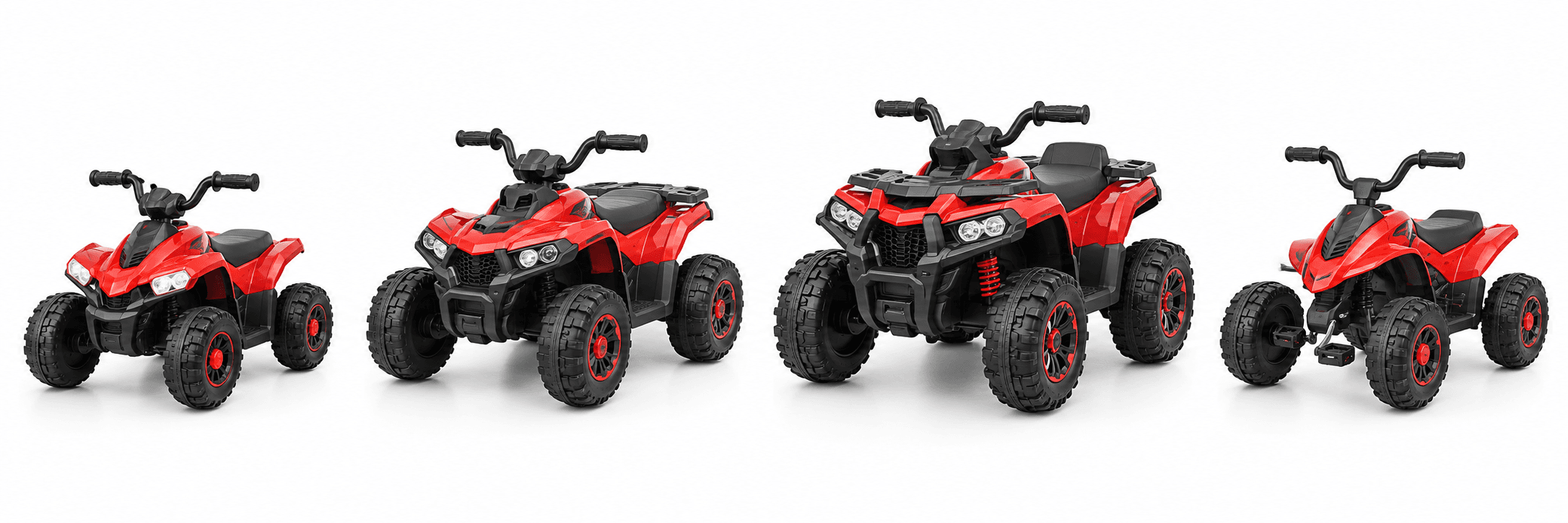
The short answer
A replacement kids ATV wheel must match the exact model and revision, wheel position, axle or hub interface, drive coupling, dimensions, offset, material, tread, load assumptions, fasteners, retention method, body and suspension clearance, and left-right requirements. Similar diameter or appearance does not establish compatibility.
Replacement wheels are frequently described by diameter and color. On ride-on quads, the hub can also connect to a gearbox or driven adaptor, set the track width, locate the wheel relative to the body, and determine retention hardware.
An incorrect wheel may rub, wobble, disengage, alter steering, change traction or noise, or overload adjacent parts.
1. Identify model, revision, position, and failure
Collect product model, batch or production period, wheel position, photographs of both wheel faces, axle or gearbox interface, fasteners, damage, and installation history. Front, rear, left, right, driven, and free wheels may not be interchangeable.
Determine whether the wheel is the failed part or whether the cause is axle bending, gearbox wear, missing washers, incorrect assembly, collision, heat, chemical exposure, or an unsuitable surface. Replacing the visible item without cause review can repeat the problem.
What to confirm before approval
- Identify exact product and wheel position.
- Photograph interfaces and retained hardware.
- Separate wheel damage from adjacent-part causes.
2. Match axle, hub, and drive coupling
Record bore or axle geometry, splines, flats, pins, keys, drive dogs, adaptor, bearing or bushing, hub depth, offset, spacer stack, washer, nut or clip, and tightening or retention specification. Use drawings, samples, gauges, and approved part references rather than memory.
Driven wheels must transfer torque without slipping or damaging the gearbox output. Free wheels must rotate with intended clearance. Confirm that replacement hardware is included only when required and that users receive model-specific instructions and tool limits.
What to confirm before approval
- Verify every mechanical interface.
- Confirm driven versus free-wheel construction.
- Control retention parts and installation method.
3. Check size, offset, clearance, and pair effects
Measure outer diameter, width, hub position, offset, runout, tread, and relevant tolerances. Install the wheel on a representative vehicle and review body, steering, suspension, motor, gearbox, and wiring clearance throughout the intended movement.
Mixing wheel diameters, tread wear, or materials across an axle can change tracking, traction, motor load, and appearance. Define whether wheels should be replaced individually, in axle pairs, or as another approved set based on the exact design and service assessment.
What to confirm before approval
- Measure more than outer diameter.
- Check dynamic clearance and steering movement.
- Define pairing and wear limits.
4. Preserve material and surface application
Plastic, EVA-style, rubber-tread, or pneumatic constructions behave differently in noise, grip, wear, deformation, mass, packaging, and maintenance. A softer replacement may increase load; a harder wheel may change noise or surface interaction. Match the approved application and evidence.
Review tread direction, molding quality, bonding, inserts, valves where relevant, odor or material concerns, and environmental limitations. Do not market a material change as an upgrade until vehicle-level effects have been assessed.
What to confirm before approval
- Match approved wheel construction.
- Inspect tread, bonding, and molding.
- Review system effects of any material change.
5. Verify installation and vehicle behavior
Provide an illustrated sequence for safe power isolation, lifting or support where permitted, hardware order, retention, and final checks. Define whether work is suitable for a customer, dealer, or qualified technician. Do not advise improvised axle drilling, heating, or gearbox modification.
After installation, check retention, free rotation, wobble, rubbing, steering, direction, tracking, abnormal noise, driven-wheel engagement, stopping, and a controlled low-speed function. Record the installed part and outcome.
What to confirm before approval
- Set installer and tool requirements.
- Check retention before powered operation.
- Verify controlled function after installation.
6. Control wheel service inventory by compatibility
Use exact service part codes with model, revision, position, color, material, hub, included hardware, supersession, and photograph. Physically separate near-identical incompatible parts. Barcode or scan where order volume justifies it.
Forecast wheels from installed base, channel, damage modes, lead time, pair policy, and model life. Retain stock or a documented successor through the support period. Track incorrect dispatch and no-fault-found returns as process failures.
What to confirm before approval
- Maintain a position-specific compatibility matrix.
- Separate similar incompatible parts.
- Forecast service demand and model transitions.
7. Worked example: apply the decision to a real order
The following scenario is illustrative. It explains a decision method rather than reporting a CubRover customer project, measured test result, certification, or completed shipment.
A dealer orders a rear wheel using only its outside diameter. The delivered part fits the axle but its hub depth does not fully engage the driven adaptor.
The supplier stops installation, identifies the model revision, compares the interface and spacer stack, and supplies the approved wheel kit. The dealer completes retention and low-speed checks and records the outcome.
This is an illustrative service case, not evidence of a CubRover field failure or a universal replacement procedure.
| Gate | Confirm | Common error |
|---|---|---|
| Identity | Model, revision, position | Ordering by appearance |
| Interface | Axle, hub, drive, retention | Matching bore only |
| Geometry | Diameter, width, offset, clearance | Ignoring hub depth |
| System | Material, pairing, vehicle test | Calling any change an upgrade |
Questions to include in the buyer decision brief
Convert the review into questions that the supplier can answer against one named model and order. The following prompts come from the topic-specific approval checks above. They are intentionally practical: each answer should identify the responsible party, supporting record, open condition, and date by which the buyer can make the next decision.
- Identify model, revision, position, and failure: Identify exact product and wheel position. Photograph interfaces and retained hardware. Separate wheel damage from adjacent-part causes.
- Match axle, hub, and drive coupling: Verify every mechanical interface. Confirm driven versus free-wheel construction. Control retention parts and installation method.
- Check size, offset, clearance, and pair effects: Measure more than outer diameter. Check dynamic clearance and steering movement. Define pairing and wear limits.
- Preserve material and surface application: Match approved wheel construction. Inspect tread, bonding, and molding. Review system effects of any material change.
- Verify installation and vehicle behavior: Set installer and tool requirements. Check retention before powered operation. Verify controlled function after installation.
- Control wheel service inventory by compatibility: Maintain a position-specific compatibility matrix. Separate similar incompatible parts. Forecast service demand and model transitions.
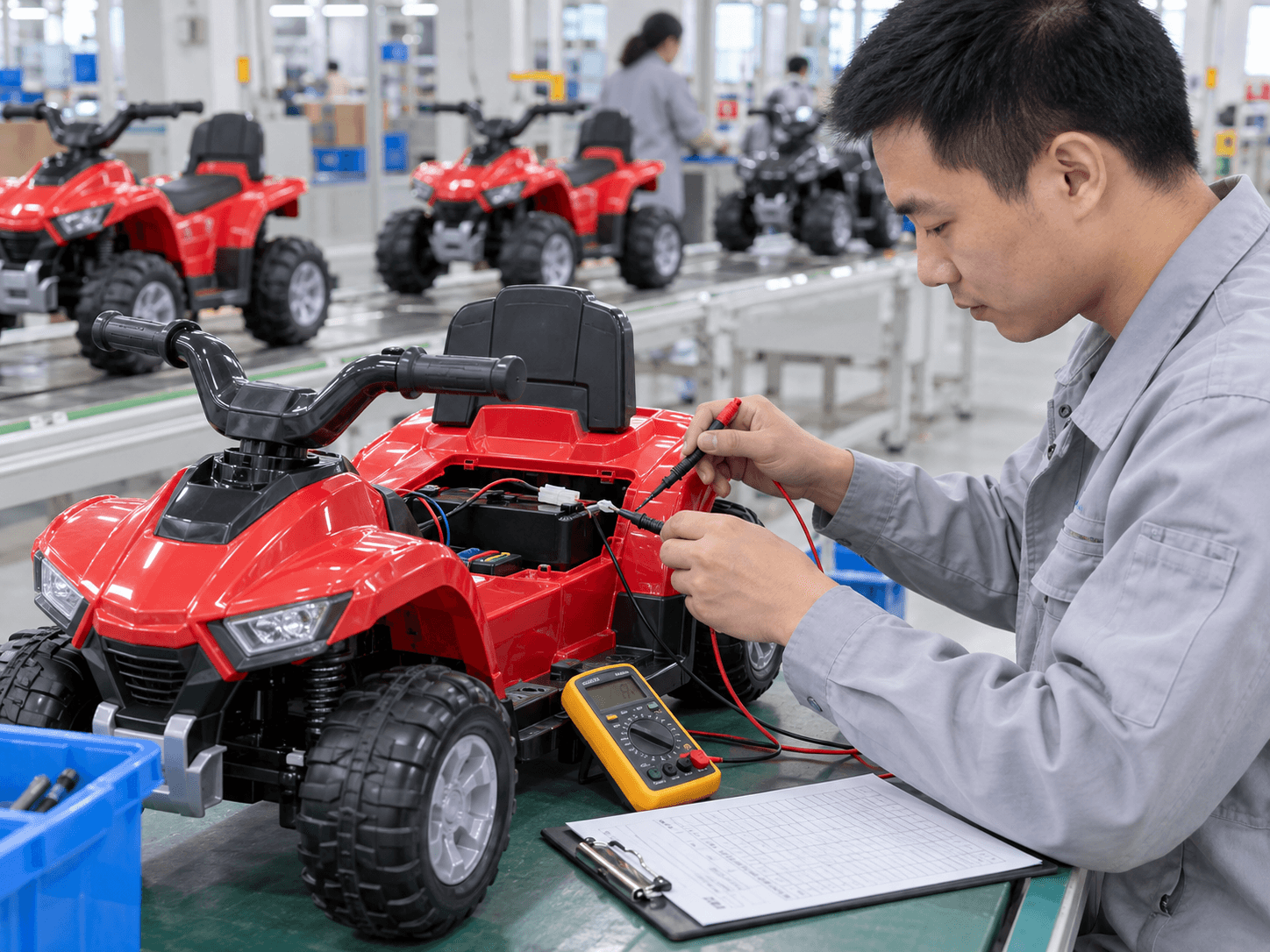
8. Turn the review into a controlled implementation plan
A useful buyer decision has three outputs: an approved requirement, evidence supporting that requirement, and a named person who can release the next activity. Keep these connected by model, configuration, market, document revision, and effective production date. If a supplier gives a conditional answer, preserve the condition in the purchasing record rather than shortening it into an unconditional product claim.
Create a wheel service record for each sellable model showing all positions, part photographs, dimensions, interface drawings, hardware stack, material, approved substitutes, installer level, and post-installation checks. Link claims and customer orders to that controlled record.
- Identify the vehicle, position, and cause.
- Match hub, axle, drive, and retention.
- Check dimensions, material, and clearance.
- Install using the approved procedure.
- Verify behavior and record the part.
Agree evidence and acceptance before work starts
Write the review method before the sample, factory testing, document check, shipment inspection, or service exercise takes place. Specify the reference, sample selection, conditions, tools, result format, acceptance boundary, and response to a failure. This makes two quotations or results comparable and prevents teams from negotiating the meaning of a pass after money and time have already been spent.
Keep a compact, traceable decision file
Retain the original requirement, dated supplier response, model and component identity, relevant photographs, calculations, reports, deviations, approvals, and release decision. A screenshot can help communication, but retain the underlying record when it matters to the decision. Distinguish a proposed target from a measured value, an engineering sample from a production reference, and an internal check from a third-party assessment.
Use one current revision where possible. Purchasing, engineering, compliance, quality, logistics, sales, and service may need different views of the information, but they should not be making decisions from different versions of the product. When a change is approved, state the first affected batch and what happens to old materials, inventory, artwork, service parts, customer instructions, and pending shipments.
Review cost and timing together with product application
The lowest visible unit price may shift cost into testing, rework, freight, storage, retail setup, support, returns, or obsolete parts. Compare the complete customer requirement and the cost of supplying it consistently. Where a number is uncertain, show the assumption and a reasonable scenario range. Do not turn an illustrative calculation into a supplier promise or a universal benchmark for the category.
Reserve time for unresolved items. A sample modification may require another review; a component change may affect evidence; a carton revision may alter loading; a late document can affect handoff. Put the owner and decision date beside each open item. A useful schedule makes these dependencies visible instead of reporting one finish date that assumes every preceding decision will happen immediately.
Close the loop after delivery
After the first shipment or implementation, compare the approved assumptions with arrival condition, assembly preparation, actual costs, receiving accuracy, customer questions, service cases, and repeat-order results. Separate an isolated event from a recurring pattern using model, batch, channel, and time in use. When a discrepancy appears, contain the affected scope, identify the cause, implement the correction, and verify the next relevant outcome.
Primary resources for the specific source facts and frameworks discussed in this guide: CPSC toy-safety business guidance.
Continue the related CubRover buyer workflow: wheel-construction comparison; spare-parts and after-sales guide; repeat-order change-control guide.
9. Conclusion and buyer handoff
Wheel replacement is a model-specific mechanical decision. Control identity, position, interface, geometry, material, retention, installation, and vehicle-level verification instead of ordering from diameter or color alone.
Before requesting a quote, share the destination market, selected product platform, target quantity, required configuration, channel, timing, and the decision you need the supplier to support. Attach the current requirement and identify open questions. This gives the factory a clear starting point for discussing samples, evidence, inspection, documents, packaging, and commercial responsibilities.
Frequently asked questions
Can a wheel with the same diameter be used?
Not unless hub, axle, drive, offset, width, material, retention, clearance, and model approval also match.
Are front and rear wheels interchangeable?
Often not; confirm exact position and driven or free-wheel architecture.
Should wheels be replaced in pairs?
Follow the model-specific assessment for wear, material, diameter, traction, and drive behavior.
Can EVA-style wheels replace plastic wheels?
Only after complete vehicle compatibility and behavior are reviewed and approved.
Who should install a replacement wheel?
The service program should define whether the task is suitable for customers, dealers, or qualified technicians.
What checks follow installation?
Retention, rotation, wobble, clearance, steering, noise, drive engagement, tracking, and controlled function.
Build a traceable wheel service program
Ask CubRover for model-specific parts and compatibility information.
Send Your Requirements