Incoming components
Model-specific batteries, motors, wheels, plastics, harnesses, hardware, labels, and packaging are identified against the current order records.
A practical factory tour should connect people, components, work instructions, inspection points, packaging, and shipment records—not just show a clean building.
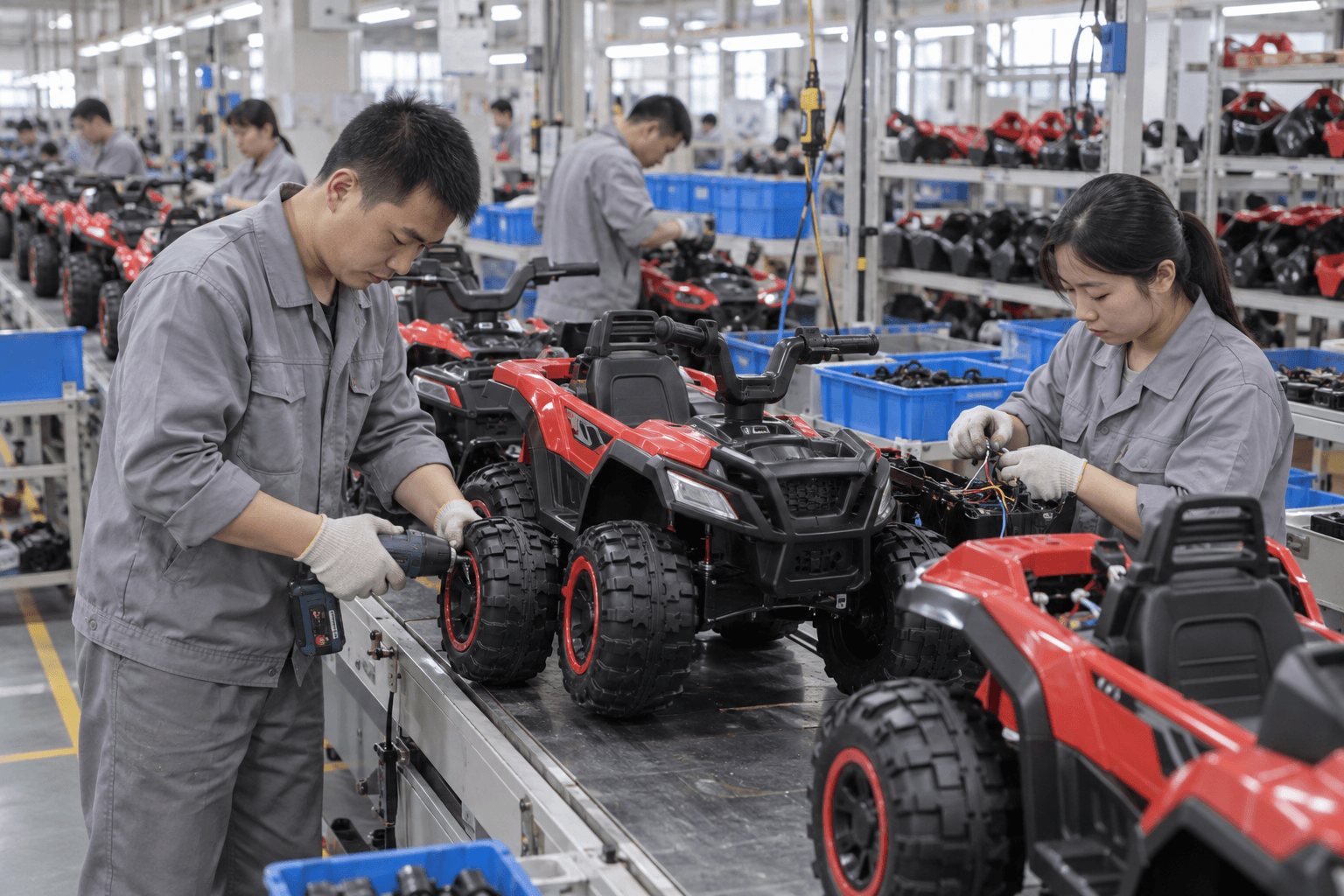
The exact route and controls vary by model. Buyers should connect every observed process with the selected configuration, responsible site, and current production records.
Model-specific batteries, motors, wheels, plastics, harnesses, hardware, labels, and packaging are identified against the current order records.
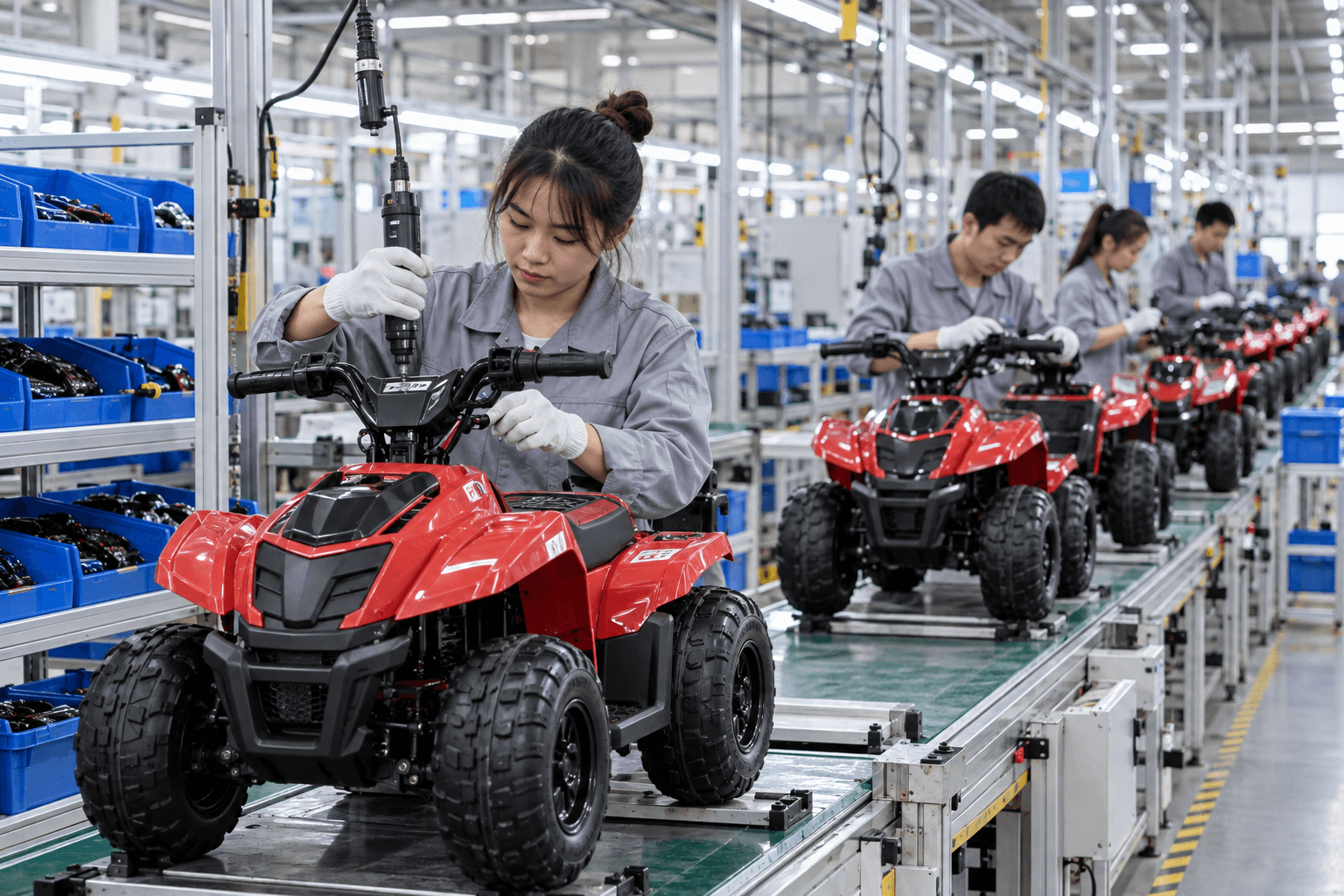
Drive, steering, electrical, and body subassemblies are prepared with controlled parts and work instructions.
Operators complete fastening, harness routing, controls, trim, labels, and required accessories for the approved configuration.
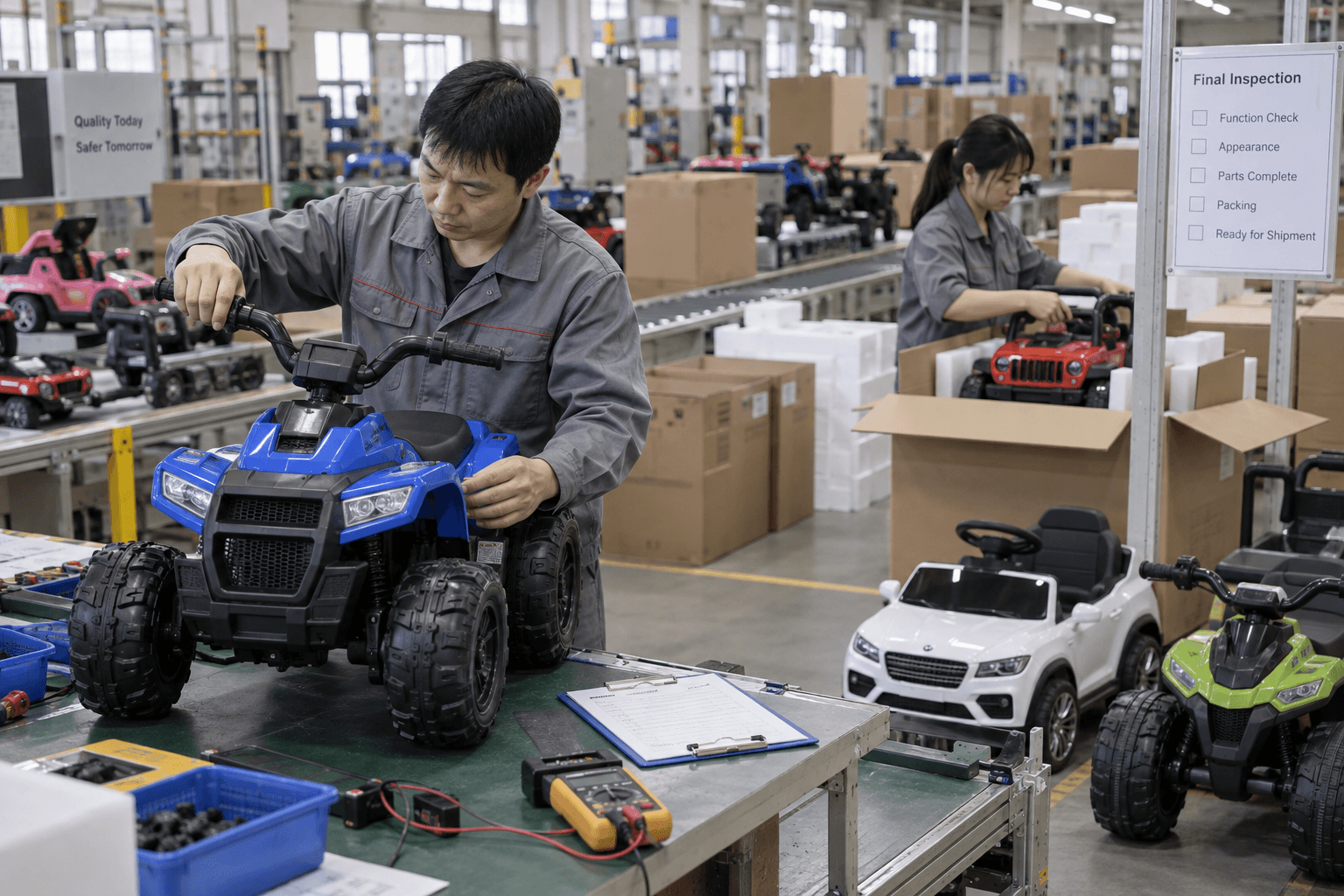
The applicable plan can cover electrical functions, direction, steering, stopping behavior, lights, sounds, and model-specific features.
Manuals, chargers, accessories, internal protection, carton artwork, shipping marks, and carton condition are checked.
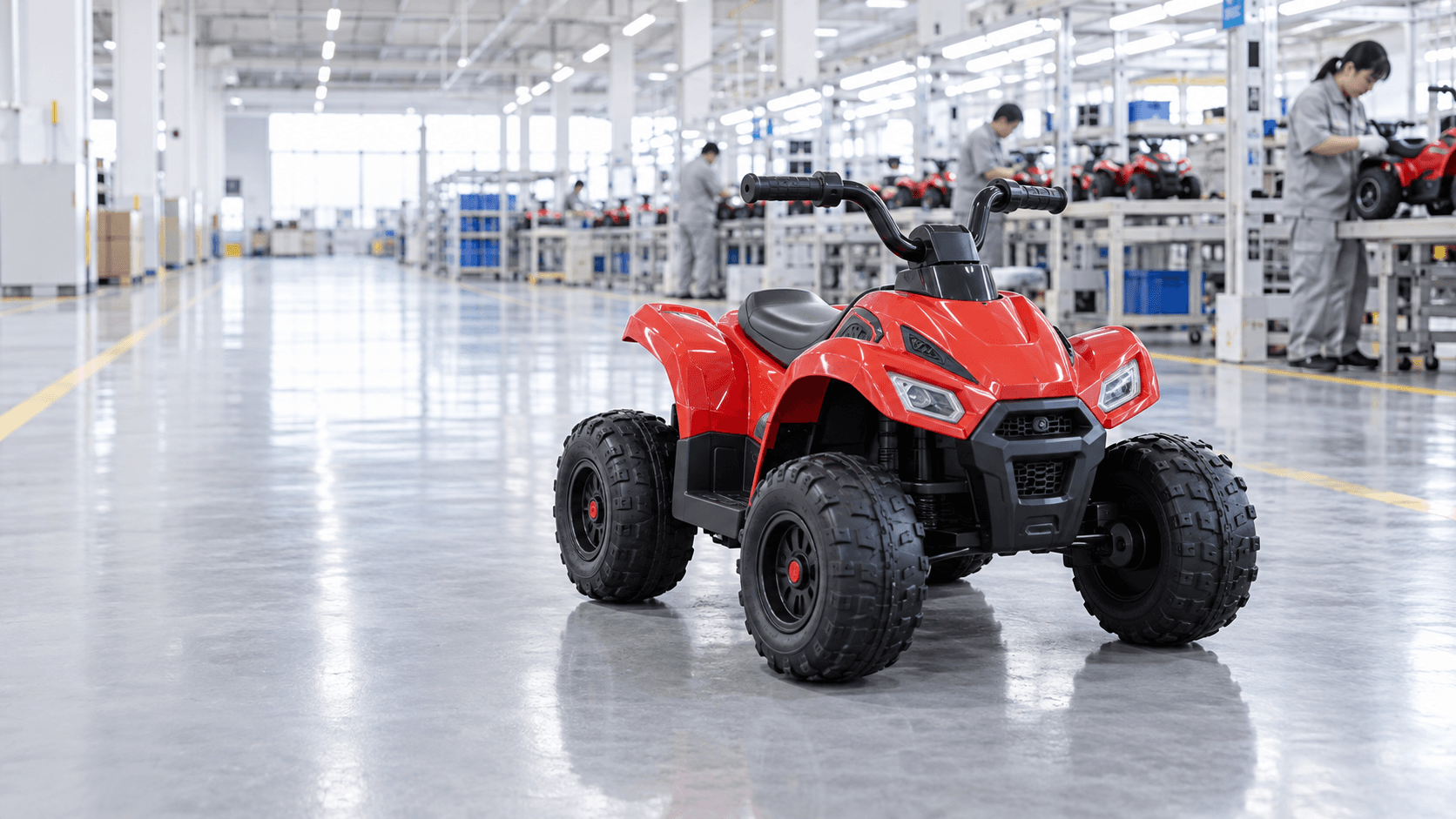
Released cartons are counted, staged, and prepared for loading with the agreed inspection and shipment records.
These representative images explain the workflow. They are not proof that a specific order is in production; order evidence should carry a model, date, revision, quantity, and inspection context.
Send the legal entity, site, model, project stage, processes to review, attendees, language, recording rules, and evidence list before the session.
Share your market, target age, quantity, feature priorities, and packaging requirements.