The short answer
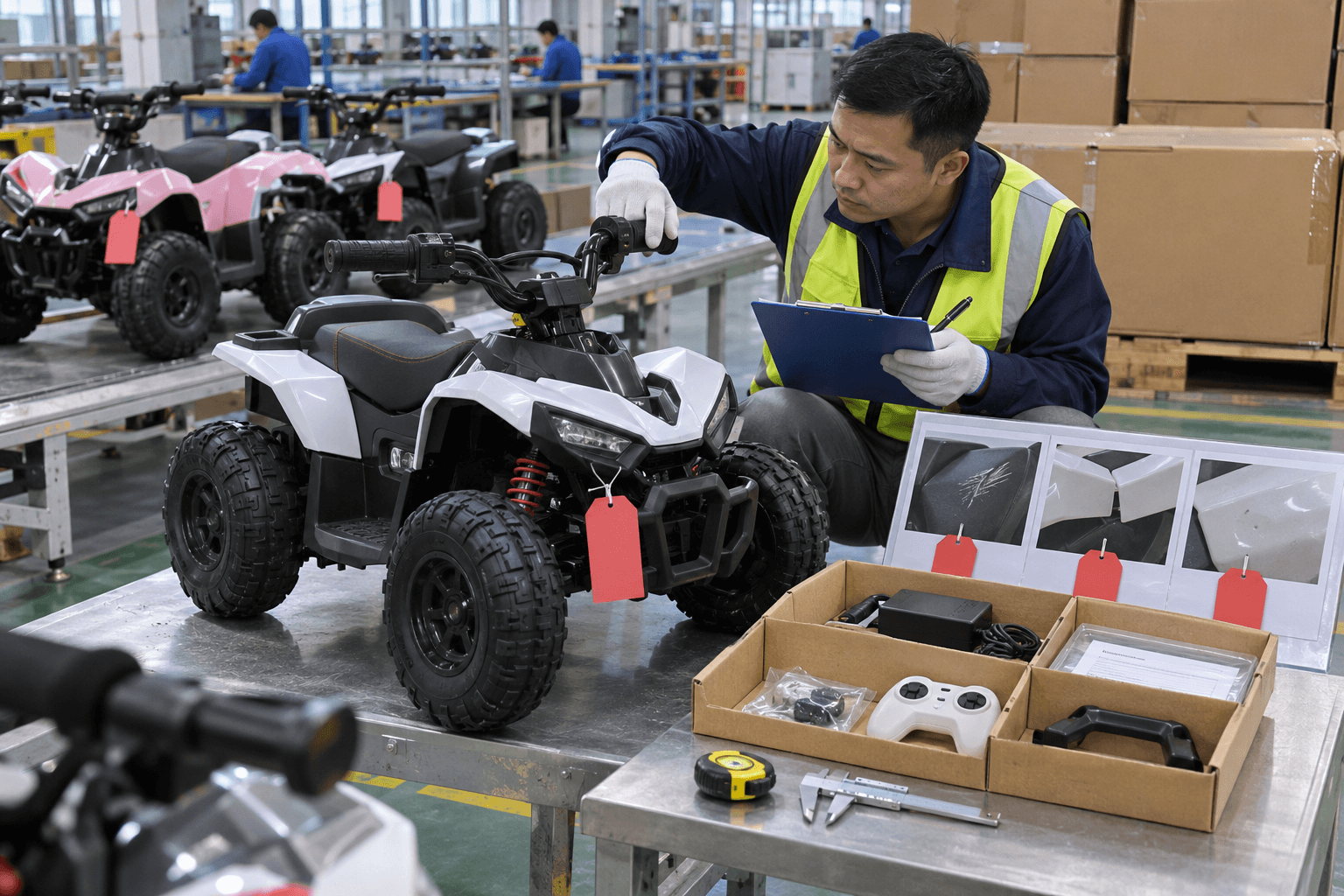
A kids ATV third-party inspection should identify the finished lot, approved specification and sample, sampling standard and plan, defect definitions, functional tests, safety-critical escalation, packaging checks, report format and release authority before inspection begins. Critical, major and minor classifications must be product-specific; an AQL result does not override a safety, compliance or configuration mismatch.
Hiring an inspection company does not automatically create an effective inspection. Inspectors can count defects only against criteria they understand, using samples they can access and methods allowed by the buyer’s instruction.
The buyer’s work happens before the visit: freeze the model, define the lot, provide the approved reference, classify defects and state what happens after failure. The current ISO 2859-1:2026 publication also reinforces the need to use current sampling procedures rather than an old table copied without context.
1. Define inspection scope and independence
State whether the visit covers pre-production, during-production, pre-shipment or container loading activities. Name the factory, model, order, quantity, production status, available cartons and inspection date. Confirm whether the inspector is independent from factory production decisions.
Provide current purchase specification, approved sample record, bill of materials or key part list, artwork, manual, packing method and previous corrective actions. Remove obsolete documents from the instruction pack.
What to confirm before approval
- Name the exact order and inspection stage.
- Provide one current specification set.
- Declare access and independence limitations.
2. Define the lot and sampling plan correctly
Decide whether models, colors or production batches form one lot or separate lots. Mixing materially different configurations can hide a concentrated problem. The sampling plan should state inspection level, AQL values or other acceptance method, sample size and accept-reject numbers.
Select cartons and units randomly across the available lot. Record unavailable quantity, warehouse location and production completion. A report based on specially prepared samples should not be represented as random finished-goods inspection.
What to confirm before approval
- Define homogeneous lots.
- Use a current approved sampling plan.
- Record random selection and lot availability.
3. Write critical, major and minor defect examples
Critical defects should cover conditions that may create unacceptable safety or regulatory risk, with qualified escalation. Major defects include failures likely to make the product unusable, materially different from specification or unacceptable to customers. Minor defects affect appearance or workmanship without the same functional impact.
Provide photographs and measurable boundaries for recurring issues such as scratches, color variation, gaps, loose fasteners, labels, wheel runout, missing parts and carton damage. Avoid classifying an issue only after the result is known.
What to confirm before approval
- Create model-specific defect examples.
- Define measurable boundaries.
- Keep safety issues outside ordinary averaging.
4. Specify functional and configuration checks
Confirm model identity, battery, charger, motors, controller, wheels, remote, modes, forward and reverse, steering, stopping, lights, sound, indicators, assembly hardware and accessories. State test duration, load, surface, battery state and pass criteria where relevant.
Distinguish routine shipment checks from design validation or laboratory testing. An inspector can verify selected functions and identity but should not be asked to recreate every compliance or endurance assessment during a short visit.
What to confirm before approval
- Verify critical component identity.
- Use repeatable functional methods.
- State what inspection cannot establish.
5. Inspect packaging, labels and shipment preparation
Review carton dimensions and weight, pack-out, protection, hardware bags, manual, charger, remote, labels, barcodes, batch marks, shipping marks and carton condition. Perform approved packaging checks without damaging the saleable lot unnecessarily.
For e-commerce routes, add parcel-related checks and evidence. For container orders, connect carton counts with loading plan, moisture controls and seal records.
What to confirm before approval
- Match the approved pack-out.
- Verify labels and accessories.
- Connect carton results to the transport route.
6. Set failure, corrective action and reinspection rules
The instruction should identify who receives urgent findings, who may stop work, how defective stock is contained, whether sorting or rework is allowed, what evidence is required and who authorizes shipment. The inspector should report facts, not negotiate acceptance on behalf of an unavailable buyer.
After rework, define reinspection scope and sample selection. A factory correction photograph may close one visible defect but does not prove that the remaining lot was corrected or that a root cause was addressed.
What to confirm before approval
- Assign hold and release authority.
- Require traceable correction evidence.
- Define independent reinspection when needed.
7. Worked example: apply the decision to a real order
The following scenario is illustrative. It explains a decision method rather than reporting a CubRover customer project, measured test result, certification, or completed shipment.
An inspector finds several remotes that do not pair, loose wheel fasteners and cosmetic scratches. The buyer’s checklist lists only “function” and “appearance,” with no defect classes or test method.
For the reinspection, the buyer separates the affected model lot, defines pairing and retention tests, classifies the issues, requires containment and corrective records, and authorizes shipment only after the agreed sampling plan passes.
Clear criteria turn the second visit into a release decision rather than another collection of photographs.
| Element | Define before visit | Record in report |
|---|---|---|
| Lot | Models, batches, quantity | Available and sampled units |
| Sampling | Standard, level, AQL | Selection and result |
| Defects | Critical, major, minor examples | Counts and evidence |
| Release | Hold, correction, reinspection rules | Decision and authorization |
8. Turn the review into a controlled implementation plan
A useful buyer decision has three outputs: an approved requirement, evidence supporting that requirement, and a named person who can release the next activity. Keep these connected by model, configuration, market, document revision, and effective production date. If a supplier gives a conditional answer, preserve the condition in the purchasing record rather than shortening it into an unconditional product claim.
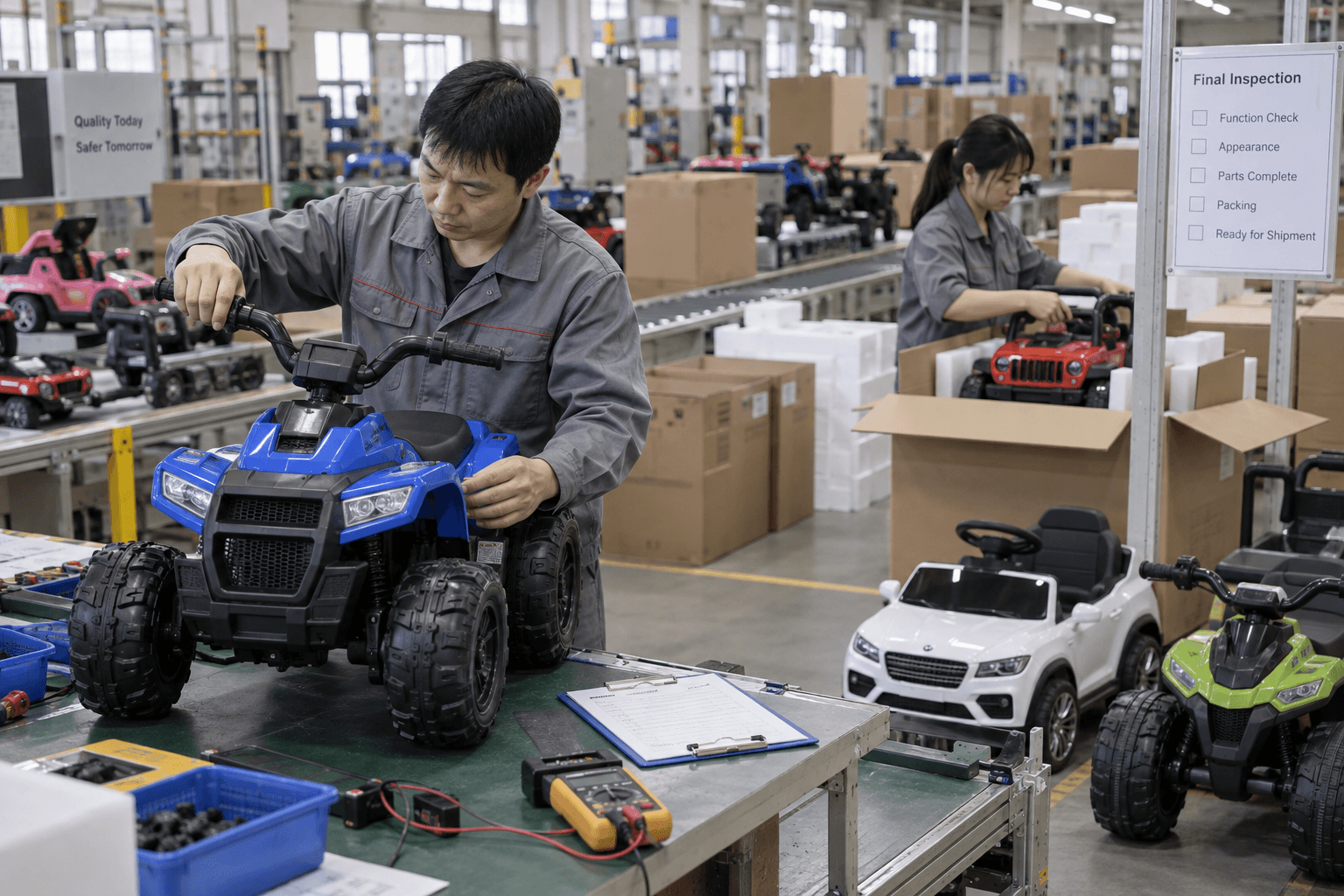
Issue a controlled inspection instruction for every order. Include order and lot identity, approved product and pack references, current sampling plan, defect catalogue, methods, tools, photo requirements, report deadline, urgent escalation, correction evidence, reinspection and shipment-release authority.
- Freeze the order specification and inspection stage.
- Define lots and current sampling plan.
- Approve model-specific defect classes.
- Specify function, label and packaging checks.
- Apply hold, correction and reinspection rules.
Primary resources for the specific source facts and frameworks discussed in this guide: ISO 2859-1:2026 sampling procedures for inspection by attributes; CPSC toy-safety business guidance.
Continue the related CubRover buyer workflow: AQL pre-shipment inspection guide; supplier quality agreement guide; kids ATV solution for importers.
9. Conclusion and buyer handoff
Third-party inspection works when the buyer defines the product, lot, sample, criteria and response before the visit. Keep safety-critical issues visible, use current sampling procedures and require traceable correction and release records.
Before requesting a quote, share the destination market, selected product platform, target quantity, required configuration, channel, timing, and the decision you need the supplier to support. Attach the current requirement and identify open questions. This gives the factory a clear starting point for discussing samples, evidence, inspection, documents, packaging, and commercial responsibilities.
Frequently asked questions
Does passing AQL prove a kids ATV is compliant?
No. Acceptance sampling does not replace design validation, applicable testing, certification or qualified safety review.
Who defines critical, major and minor defects?
The buyer should approve product-specific definitions with quality and technical input before inspection.
Can different colors be one inspection lot?
Only when the configurations and risk are sufficiently homogeneous and the sampling plan appropriately covers them.
Should inspectors test every function?
Define a risk-based, repeatable plan. Some checks may apply to every sampled unit, others to a smaller approved subset.
What happens after inspection failure?
Contain the lot, investigate, correct, verify the affected scope and apply the agreed reinspection and release process.
Can factory photos replace reinspection?
They may support correction evidence but do not always establish that the full lot is acceptable.
Build a decision-ready inspection plan
Discuss product checks, defect classes, sampling and shipment release with CubRover.
Contact Us