The short answer
A kids ATV e-commerce asset pack should include stable SKU and GTIN data, verified specifications, complete included-item and assembly records, compliant titles and claims, white-background and lifestyle images, feature details, dimensions, packaging and delivery information, setup video, warnings, warranty and spare-parts guidance. Returns decline when content, packaging, assembly and support all describe the same production configuration.
Large ride-on products create expectation risk online because shoppers cannot inspect size, assembly, noise, speed behavior, charger or carton before purchase. A polished hero image does not answer those questions and can increase returns when it hides the real configuration.
Factories and importers can reduce avoidable returns by treating content as controlled product data. Every claim, image, video and instruction should be reviewed against the approved sample and updated after product changes.
1. Create one listing-ready product data source
Maintain SKU, GTIN where applicable, model, age guidance, dimensions, weight, maximum supported load, battery, charger, motors, wheels, controls, speed modes, included items, assembly level, carton size and weight, warranty and spare-parts references.
Separate measured, supplier-stated and buyer-approved values. Record units and conditions. Do not let marketplaces, dealers and the brand site publish different voltage, load, size or included-item claims for the same SKU.
What to confirm before approval
- Use stable SKU and product identity.
- Record source and conditions for values.
- Syndicate one approved data set.
2. Produce a complete and truthful image set
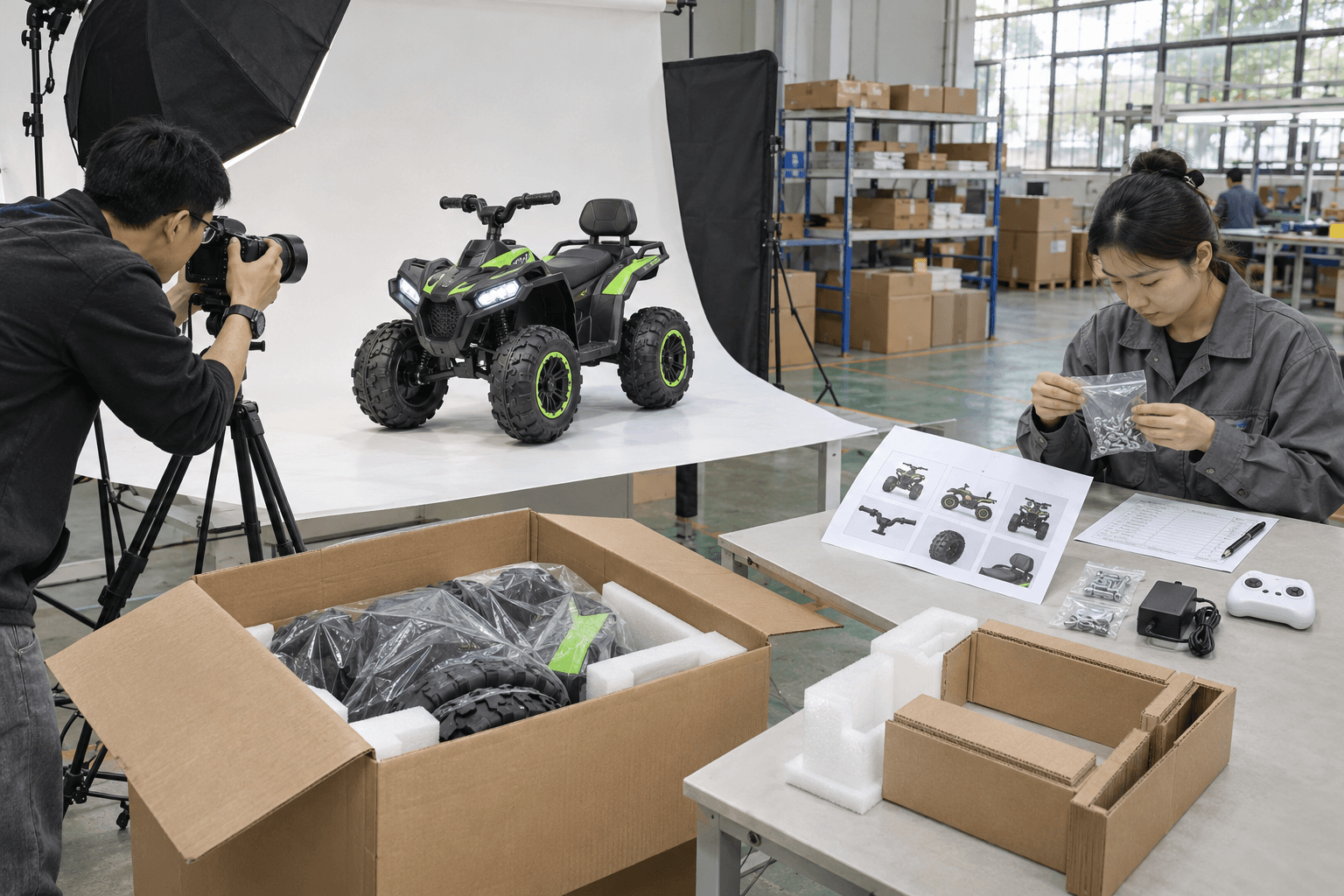
Capture front, rear, sides, three-quarter views, rider-area scale, controls, charging port, wheels, seat, underbody where useful, included accessories, assembly parts, charger label and packaging. Use a production-representative sample.
Lifestyle images should show the intended application without unsupported terrain, protective-performance or age implications. Identify optional accessories and avoid displaying a feature that is not included in the sellable SKU.
What to confirm before approval
- Photograph the actual sellable configuration.
- Show scale, controls and included items.
- Label optional or illustrative content clearly.
3. Control titles, bullets and marketplace claims
Use search language naturally while keeping claims factual. Explain voltage and motor layout without promising universal speed or runtime. State surface, supervision and weather limitations supported by the product file.
Review marketplace titles, backend attributes, comparison tables and ads together. A compliant product page can still be undermined by an exaggerated ad or reseller description. Keep evidence for objective performance and safety-related statements.
What to confirm before approval
- Approve claims against evidence.
- Keep channel descriptions consistent.
- Avoid unsupported superlatives and terrain claims.
4. Set delivery and assembly expectations before checkout
Publish carton dimensions and weight where useful, delivery method, signature or appointment expectations, packaging condition steps, assembly time range based on controlled trials, required adult work, tools, first charge and missing-part contact path.
Create an unboxing sequence with photographs or video. Bag and identify hardware logically. A customer who understands what arrives and what must be assembled is less likely to report an intact, incomplete-looking product as defective.
What to confirm before approval
- Explain the delivery format.
- Show included parts and assembly scope.
- Provide a visible missing-part pathway.
5. Use reason-coded return and support data
Separate carrier damage, concealed damage, missing parts, wrong item, assembly confusion, charging process, true electrical failure, cosmetic expectation, size mismatch, buyer remorse and no-fault-found cases. Require photographs and model or batch identity where appropriate.
Calculate cost and recurrence by reason. Improve the listing when expectations are wrong, packaging when damage repeats, instructions when setup fails, factory control when defects cluster, and service parts when complete returns are avoidable.
What to confirm before approval
- Use consistent return reason codes.
- Connect cases to SKU and batch.
- Assign correction to content, logistics, factory or service.
6. Keep digital assets synchronized with product changes
Version photographs, video, copy, manuals, labels and product feeds. When color, charger, remote, dashboard, wheel, battery or packaging changes, identify affected assets and channels before the new batch ships.
Give retailers an update notice with effective SKU or batch, replacement files and clear deletion instructions for obsolete claims. Audit live listings periodically; a correct master file does not guarantee that every reseller updated it.
What to confirm before approval
- Version and date every asset pack.
- Link changes to effective batches.
- Audit live dealer and marketplace listings.
7. Worked example: apply the decision to a real order
The following scenario is illustrative. It explains a decision method rather than reporting a CubRover customer project, measured test result, certification, or completed shipment.
A marketplace listing shows a fully assembled quad with a feature-rich dashboard, but the delivered SKU requires wheel and handlebar assembly and uses a simpler control panel. Customers report missing parts and “wrong product” returns.
The importer rebuilds the asset pack from a production sample, adds included-item and unboxing images, clarifies assembly, replaces the dashboard photograph and maps the updated files to every channel. Return reasons are monitored after the change.
The correction addresses expectation and content control rather than blaming all returns on product quality.
| Layer | Required asset | Return risk reduced |
|---|---|---|
| Identity | SKU, GTIN, exact configuration | Wrong item and variant |
| Expectation | Dimensions, features, limitations | Size and performance mismatch |
| Setup | Unboxing and assembly guide | Missing-part and setup cases |
| Learning | Reason-coded return data | Recurring content or process gaps |

8. Turn the review into a controlled implementation plan
A useful buyer decision has three outputs: an approved requirement, evidence supporting that requirement, and a named person who can release the next activity. Keep these connected by model, configuration, market, document revision, and effective production date. If a supplier gives a conditional answer, preserve the condition in the purchasing record rather than shortening it into an unconditional product claim.
Create a versioned digital asset pack for every sellable SKU. Include data sheet, GTIN record, image manifest, video list, approved copy, claim evidence, included-item map, carton and delivery data, assembly and charging content, warnings, warranty, parts, effective batch and channel-distribution log.
- Freeze the sellable SKU and data source.
- Photograph the production-representative configuration.
- Approve claims and channel attributes.
- Publish delivery, unboxing and assembly expectations.
- Analyze returns and synchronize changes.
Primary resources for the specific source facts and frameworks discussed in this guide: GS1 guidance on GTINs for marketplaces and retailers; GS1 Product Image Specification; U.S. FTC advertising and marketing guidance; CPSC Resellers Guide to Selling Safer Products.
Continue the related CubRover buyer workflow: kids ATV solution for e-commerce sellers; retail product-listing data guide; retail versus e-commerce packaging guide; returns and reverse-logistics guide.
9. Conclusion and buyer handoff
E-commerce returns fall when the listing, carton, setup and service process describe the same product. Control the data and assets by SKU and batch, then use reason-coded field evidence to improve the next version.
Before requesting a quote, share the destination market, selected product platform, target quantity, required configuration, channel, timing, and the decision you need the supplier to support. Attach the current requirement and identify open questions. This gives the factory a clear starting point for discussing samples, evidence, inspection, documents, packaging, and commercial responsibilities.
Frequently asked questions
What images should a kids ATV listing include?
Complete product views, scale, controls, charging port, wheels, seat, included items, assembly parts, charger and packaging where useful.
Can factory catalog images be reused?
Only after confirming they show the exact sellable configuration and usage rights are clear.
Do marketplaces require a GTIN?
Many marketplaces and retailers do. Confirm the channel and obtain legitimate identifiers through the appropriate GS1 process.
What return reasons should be tracked?
Damage, missing parts, wrong item, assembly, charging, product defect, expectation, size, remorse and no-fault-found, linked to SKU and batch.
Should assembly time be advertised?
Use a range supported by controlled trials and state adult work, tools and preparation clearly.
When should digital assets be updated?
Before the effective batch ships whenever the product, accessories, packaging, manual or supported claims change.
Prepare a channel-ready kids ATV range
Ask CubRover for product, packing, assembly and customization information for your e-commerce program.
Send Your Requirements