
The short answer
Kids ATV retail margin should be modeled from net realized revenue minus the complete delivered and supported cost. Include factory price, customization, testing, freight, duty and taxes where applicable, brokerage, warehousing, parcel delivery, payment fees, marketing, assembly support, damage, returns, warranty parts, markdowns and inventory carrying risk. Use conservative, base and upside scenarios rather than a single universal markup.
A quad that appears profitable at FOB price can become weak after dimensional freight, parcel surcharges, damage, support and seasonal markdowns. Conversely, a higher-cost platform may create better realized margin when packaging, product fit and after-sales performance are stronger.
This guide does not provide a universal retail markup. It provides a buyer model for comparing products and channels with visible assumptions.
1. Estimate net realized revenue instead of list price
Start with planned MSRP or advertised price, then model promotions, coupons, marketplace fees, payment fees, dealer discounts, cancellations, refunds and markdowns. Use actual channel policies and tax treatment for the destination.
Separate list price from average selling price. A seasonal product may spend only part of the year at full price, and different colors or configurations can produce different sell-through.
What to confirm before approval
- Set MSRP and expected average selling price.
- Model channel fees and promotions.
- Separate taxes from business revenue.
2. Build the full landed-cost stack
Combine unit price with tooling allocation, packaging, testing, inspection, inland transport, export charges, ocean or air freight, insurance, duty, trade measures, brokerage, port fees and destination transport. Use actual carton cube and loading quantities.
Show Incoterm assumptions and excluded costs. Two supplier quotations are not comparable when one includes export handling and another leaves major destination charges outside the visible price.
What to confirm before approval
- Normalize quotations to one Incoterm.
- Use verified carton and container data.
- Review current duty and destination charges.
3. Add warehousing, fulfillment and selling costs
Estimate inbound receiving, storage, pick and pack, oversized parcel charges, residential delivery, address correction, peak surcharges and refused delivery. For stores, include shelf space, internal transfer and assembly-display costs.
Include content production, advertising, marketplace commission, customer-service time and payment risk. These costs are not product defects, but they determine whether the assortment is commercially sustainable.
What to confirm before approval
- Model route-specific fulfillment.
- Include acquisition and service costs.
- Distinguish store, marketplace and direct channels.
4. Create realistic damage, return and warranty reserves
Use reason-coded data for transport damage, missing hardware, assembly confusion, charging issues, customer expectation, true product defects and no-fault-found returns. Apply rates by model, channel and time in market rather than one category assumption.
Model the cost of parts, labor, outbound reshipment, reverse logistics, refurbishment, disposal and customer credits. A small improvement in packaging or instructions may justify a higher unit cost if it reduces expensive complete-unit returns.
What to confirm before approval
- Separate return and defect causes.
- Cost the complete resolution path.
- Update reserves from shipment evidence.
5. Set price architecture and claims responsibly
Compare rider fit, configuration, performance evidence, support, warranty and channel position. Do not create a premium tier from unverified words such as 4WD, off-road, waterproof or long range.
Review MSRP guidance, promotions and any minimum-advertised-price policy with qualified competition and commercial advice. Dealers need room to operate, but pricing rules must fit the applicable law and actual relationship.
What to confirm before approval
- Tie price tiers to verified customer value.
- Control product claims and included features.
- Review pricing policies for the market.
6. Use scenarios to make the purchase-order decision
Build conservative, base and upside cases for selling price, sell-through, freight, damage, returns and markdown. Calculate gross margin, contribution per unit, cash required, break-even volume and inventory exposure.
Test the effect of carton improvements, mixed containers, local parts stock, a narrower range or staged orders. The best sourcing decision may be a smaller first order with better evidence rather than the lowest theoretical cost at maximum volume.
What to confirm before approval
- Run at least three scenarios.
- Identify the most sensitive assumptions.
- Set reorder and markdown decision gates.
7. Worked example: apply the decision to a real order
The following scenario is illustrative. It explains a decision method rather than reporting a CubRover customer project, measured test result, certification, or completed shipment.
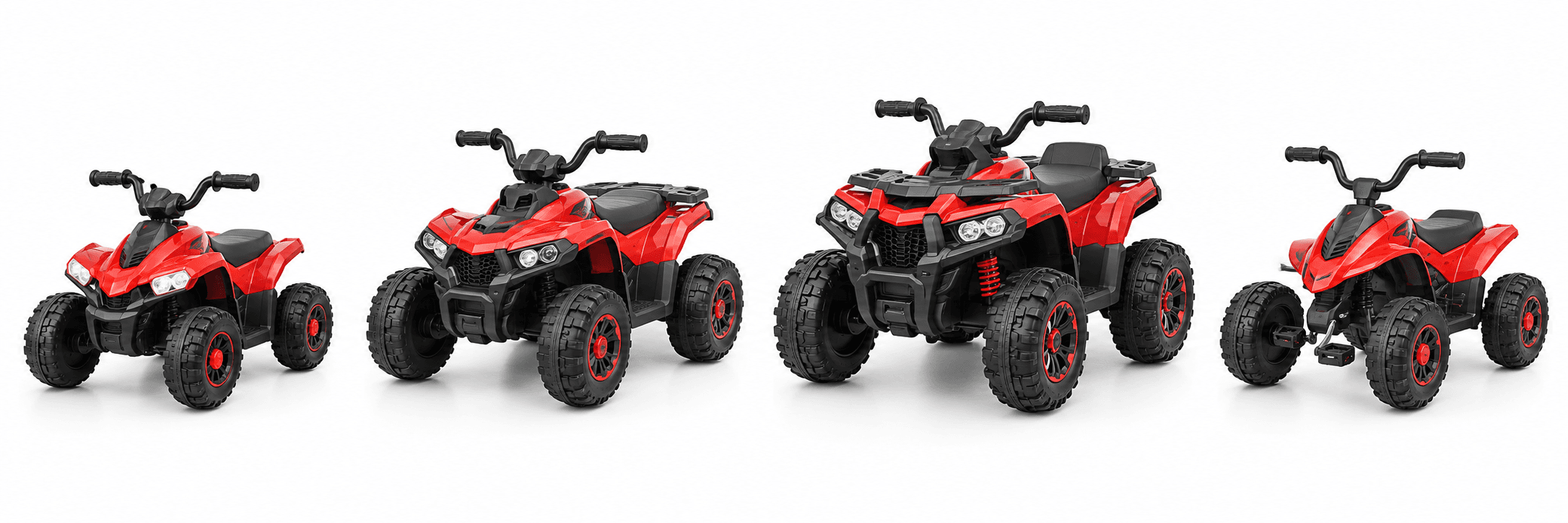
A retailer compares two 12V quads. Model A is cheaper at the factory but has a larger carton, unclear spare parts and a higher damage assumption. Model B costs more per unit but loads more efficiently and includes a controlled parts kit.
After freight, fulfillment, returns and support are modeled, Model B produces a stronger base-case contribution. The buyer pilots both configurations and replaces estimates with receiving, assembly and service data.
The decision changes because total operating economics—not headline FOB price—are compared.
| Layer | Example inputs | Decision output |
|---|---|---|
| Revenue | ASP, promotions, fees | Net realized revenue |
| Landed | Product, freight, duty, brokerage | Delivered unit cost |
| Operations | Storage, fulfillment, marketing | Channel contribution |
| Risk | Damage, returns, warranty, markdown | Scenario margin |
8. Turn the review into a controlled implementation plan
A useful buyer decision has three outputs: an approved requirement, evidence supporting that requirement, and a named person who can release the next activity. Keep these connected by model, configuration, market, document revision, and effective production date. If a supplier gives a conditional answer, preserve the condition in the purchasing record rather than shortening it into an unconditional product claim.
Create a SKU-level margin model with versioned assumptions and data sources. Connect product configuration, carton cube, container quantity, Incoterm, duty review, channel fees, delivery, return reasons, warranty costs, inventory age and realized price. Review forecast versus actual after every shipment.
- Estimate net realized revenue.
- Normalize complete landed cost.
- Add channel and fulfillment costs.
- Set evidence-based reserves.
- Run scenarios before committing inventory.
Primary resources for the specific source facts and frameworks discussed in this guide: U.S. International Trade Commission tariff information; U.S. FTC advertising and marketing guidance.
Continue the related CubRover buyer workflow: Incoterms and landed-cost guide; seasonal inventory planning guide; returns and reverse-logistics guide.
9. Conclusion and buyer handoff
Profitable kids ATV sourcing depends on realized price, complete landed cost and the cost of supporting the customer. Make assumptions visible, test downside scenarios and replace forecasts with receiving, return and sell-through evidence.
Before requesting a quote, share the destination market, selected product platform, target quantity, required configuration, channel, timing, and the decision you need the supplier to support. Attach the current requirement and identify open questions. This gives the factory a clear starting point for discussing samples, evidence, inspection, documents, packaging, and commercial responsibilities.
Frequently asked questions
What is a good retail margin for kids ATVs?
There is no universal number. It depends on channel costs, freight, returns, warranty, promotions, inventory risk and market position.
Should margin be calculated from MSRP?
Use expected net realized revenue, not list price alone.
Which costs are commonly missed?
Dimensional freight, parcel surcharges, brokerage, storage, marketing, assembly support, returns, parts and markdowns.
Can a higher factory price improve margin?
Yes, if it improves loading, damage, support, sell-through or customer value enough to reduce total costs.
How should new products be forecast?
Use conservative, base and upside cases, then update with pilot-order data.
What information should suppliers provide?
Exact configuration, unit price basis, carton size and weight, loading quantity, MOQ, lead time, included items and service-parts plan.
Compare complete program economics
Ask CubRover for model, packing and quotation information for your retail scenario.
Get a Quote