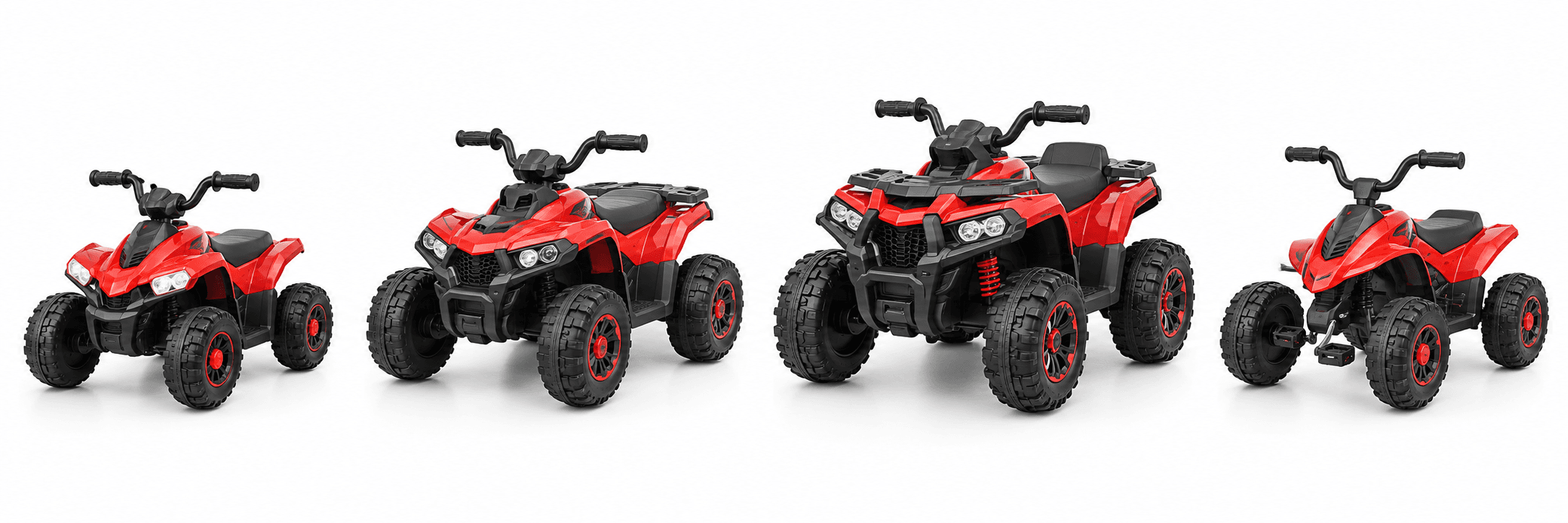
The short answer
Choose a kids ATV when the range needs a compact straddle-seat product, handlebar controls, quad styling, and the intended surface and rider fit support that format. Choose a ride-on car when seated cabin-style play, steering-wheel control, doors, seats, or licensed styling drive the purchase. Compare exact models for stability, speed, assembly, carton, service, and claims.
Retail buyers often compare quads and cars as if only the body shell changes. In practice, rider posture, control reach, entry and exit, steering, visibility, wheelbase, packaging, assembly, electronics, and customer expectations can differ.
This guide helps importers plan category roles. It does not declare one format safer or better for every child; age grading, application, warnings, supervision, and product-specific assessment remain essential.
1. Define the customer job before comparing formats
Identify whether the shopper wants a compact first ride-on, an outdoor-styled quad, a realistic car experience, a two-seat gift, or a premium licensed design. Record intended rider range, setting, storage, transport, supervision, and acceptable setup work. The same headline voltage can serve very different jobs.
Use distinct range roles rather than duplicating price points with two bodies. A quad can anchor adventure styling while a car provides cabin-style role play. The choice should also reflect retailer display space, parcel limits, spare-parts capacity, and the market’s actual search and return patterns.
What to confirm before approval
- Define the intended customer and use environment.
- Assign a clear retail role to each format.
- Avoid comparing products only by voltage and price.
2. Compare rider posture, access, and controls
A quad generally uses a straddle seat and handlebars; a ride-on car normally uses a seat, steering wheel, pedal, and sometimes doors or belts. Measure how the intended user mounts, reaches controls, sees the path, steers, and exits. Review clothing, footwear, and adult access during setup.
Check control logic across forward, reverse, speed modes, remote priority, start-up, and stopping. Familiar-looking car controls are not automatically easier, and handlebar controls are not automatically more suitable. Observe representative users under a professionally defined protocol without turning an informal demonstration into an age claim.
What to confirm before approval
- Record posture and control-reach evidence.
- Review entry, exit, visibility, and adult access.
- Test every control state and transition.
3. Match geometry and wheels to the stated surface
Compare wheelbase, track width, center of mass, steering angle, turning behavior, ground clearance, wheel construction, suspension, and stopping response. A quad appearance does not prove rough-terrain capability, while a car body does not limit a product to a perfectly smooth floor.
Define the permitted surface and gradient claims narrowly. Validate the exact load, battery state, tires or wheels, speed mode, and route. Keep off-road language out of retail data unless the complete product and evidence support it for the destination market.
What to confirm before approval
- State allowed and excluded surfaces.
- Review stability and turning for the exact geometry.
- Align marketing scenes with verified application.
4. Compare cartons, assembly, and store handling
Cars can have larger bodies, windscreens, doors, seats, and decorative parts; quads may pack more compactly but require handlebar or wheel installation. Measure the final carton, gross weight, assembly steps, charging access, protection, and display footprint rather than assuming the smaller-looking product ships smaller.
Rehearse sealed-carton setup using supplied instructions and hardware. Time the process, record tools and errors, and assess whether retail staff, a fulfilment center, or the customer performs it. Include damage, missing-part, and reverse-logistics cost in the format comparison.
What to confirm before approval
- Use production-intent carton data.
- Rehearse complete setup from a sealed pack.
- Model delivery, display, and return handling.
5. Build a price ladder without hidden duplication
Normalize battery, charger, motor system, controls, licensed content, packaging, included accessories, evidence, and after-sales parts. A larger car can cost more because of body and feature content, while a compact quad can carry a premium drivetrain. Compare delivered configuration, not the visual size of the shell.
Limit colors and variants until sell-through is known. Track conversion, returns, damage, assembly questions, and service cases by format and SKU. Add or remove range positions using evidence rather than treating every new body style as incremental demand.
What to confirm before approval
- Normalize complete configurations and costs.
- Control initial color and feature complexity.
- Review sell-through and support data by SKU.
6. Plan service and claims by architecture
Create service BOMs for batteries, chargers, wheels, switches, controllers, motors, gearboxes, steering parts, body trim, and format-specific items. Confirm which parts are shared and which only look similar. Car doors and steering mechanisms create different support needs from quad handlebars and exposed wheel assemblies.
Prepare approved comparison language for retailers. Avoid universal claims such as safer, faster, easier, or all-terrain without defined evidence. Give customer-support teams model identification, charging guidance, setup references, symptom intake, and escalation limits before launch.
What to confirm before approval
- Map shared and unique service parts.
- Approve factual format-comparison claims.
- Train support on model-specific intake.
7. Worked example: apply the decision to a real order
The following scenario is illustrative. It explains a decision method rather than reporting a CubRover customer project, measured test result, certification, or completed shipment.
A retailer considers a 12V quad and a 12V ride-on car at the same retail price. The initial range sheet treats them as substitutes because the electrical headline matches.
A structured review shows different rider posture, carton size, assembly time, display footprint, wheel construction, and service parts. The quad fills a compact adventure position; the car serves cabin-style play and requires more fulfilment space. The buyer launches one controlled color of each and tracks setup and return reasons separately.
This scenario illustrates assortment logic, not a measured CubRover sales result or a claim that either body format is universally preferable.
| Decision area | Kids ATV questions | Ride-on car questions |
|---|---|---|
| Application | Straddle posture and quad use | Cabin play and seating |
| Controls | Handlebars and mode logic | Wheel, pedal, doors, remote |
| Operations | Quad pack-out and parts | Body, trim, assembly, space |
| Range | Adventure role and variants | Style role and variants |
Questions to include in the buyer decision brief
Convert the review into questions that the supplier can answer against one named model and order. The following prompts come from the topic-specific approval checks above. They are intentionally practical: each answer should identify the responsible party, supporting record, open condition, and date by which the buyer can make the next decision.
- Define the customer job before comparing formats: Define the intended customer and use environment. Assign a clear retail role to each format. Avoid comparing products only by voltage and price.
- Compare rider posture, access, and controls: Record posture and control-reach evidence. Review entry, exit, visibility, and adult access. Test every control state and transition.
- Match geometry and wheels to the stated surface: State allowed and excluded surfaces. Review stability and turning for the exact geometry. Align marketing scenes with verified application.
- Compare cartons, assembly, and store handling: Use production-intent carton data. Rehearse complete setup from a sealed pack. Model delivery, display, and return handling.
- Build a price ladder without hidden duplication: Normalize complete configurations and costs. Control initial color and feature complexity. Review sell-through and support data by SKU.
- Plan service and claims by architecture: Map shared and unique service parts. Approve factual format-comparison claims. Train support on model-specific intake.
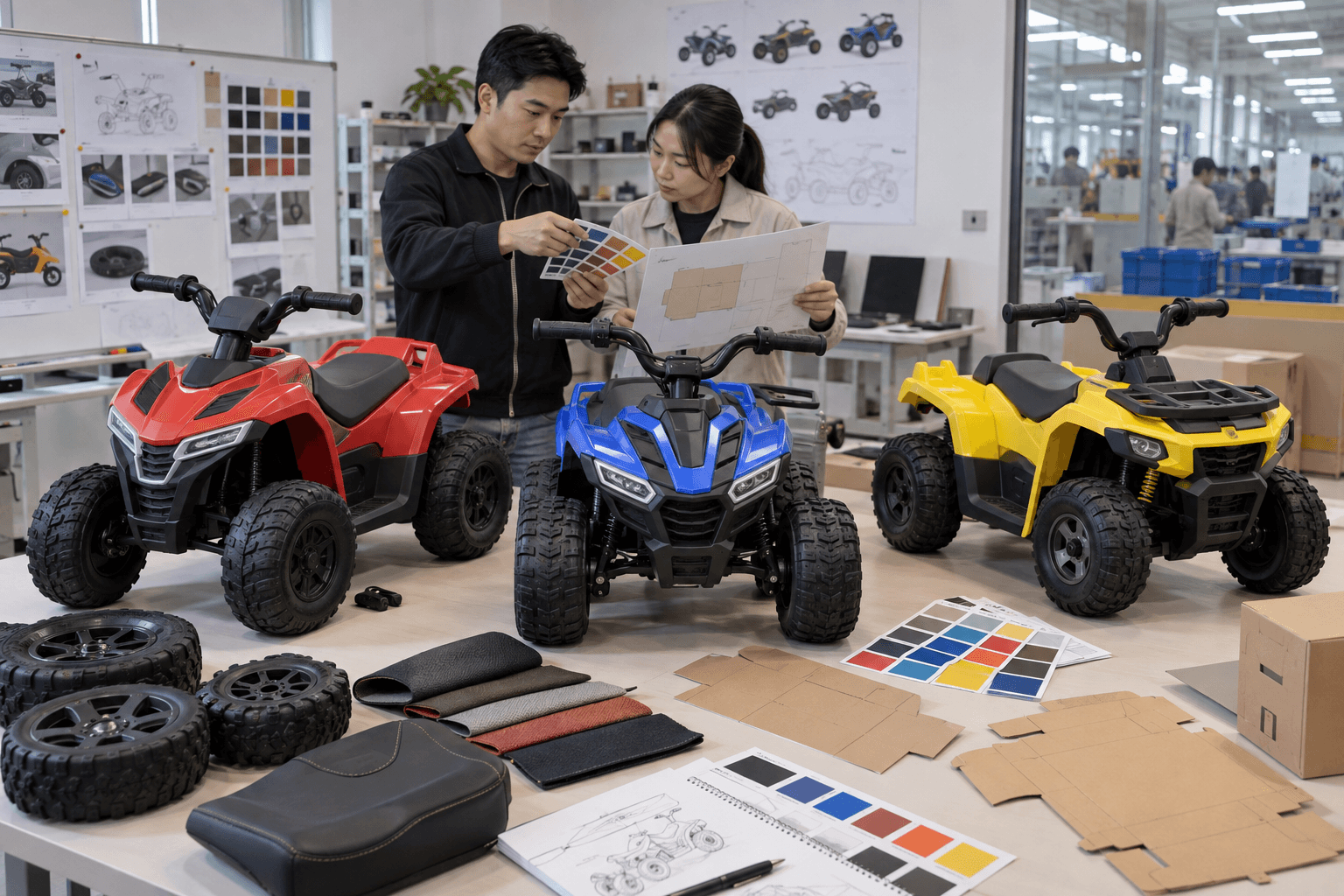
8. Turn the review into a controlled implementation plan
A useful buyer decision has three outputs: an approved requirement, evidence supporting that requirement, and a named person who can release the next activity. Keep these connected by model, configuration, market, document revision, and effective production date. If a supplier gives a conditional answer, preserve the condition in the purchasing record rather than shortening it into an unconditional product claim.
Use one range matrix with intended customer, application, measurements, controls, carton, setup, service BOM, approved claims, landed cost, and launch metrics for both formats. Keep model-specific evidence attached so a category comparison does not erase important differences.
- Define the customer and range role.
- Compare exact samples and controlled specifications.
- Validate setup, packaging, and service readiness.
- Approve claims and channel data.
- Launch a manageable mix and review evidence.
Agree evidence and acceptance before work starts
Write the review method before the sample, factory testing, document check, shipment inspection, or service exercise takes place. Specify the reference, sample selection, conditions, tools, result format, acceptance boundary, and response to a failure. This makes two quotations or results comparable and prevents teams from negotiating the meaning of a pass after money and time have already been spent.
Keep a compact, traceable decision file
Retain the original requirement, dated supplier response, model and component identity, relevant photographs, calculations, reports, deviations, approvals, and release decision. A screenshot can help communication, but retain the underlying record when it matters to the decision. Distinguish a proposed target from a measured value, an engineering sample from a production reference, and an internal check from a third-party assessment.
Use one current revision where possible. Purchasing, engineering, compliance, quality, logistics, sales, and service may need different views of the information, but they should not be making decisions from different versions of the product. When a change is approved, state the first affected batch and what happens to old materials, inventory, artwork, service parts, customer instructions, and pending shipments.
Review cost and timing together with product application
The lowest visible unit price may shift cost into testing, rework, freight, storage, retail setup, support, returns, or obsolete parts. Compare the complete customer requirement and the cost of supplying it consistently. Where a number is uncertain, show the assumption and a reasonable scenario range. Do not turn an illustrative calculation into a supplier promise or a universal benchmark for the category.
Reserve time for unresolved items. A sample modification may require another review; a component change may affect evidence; a carton revision may alter loading; a late document can affect handoff. Put the owner and decision date beside each open item. A useful schedule makes these dependencies visible instead of reporting one finish date that assumes every preceding decision will happen immediately.
Close the loop after delivery
After the first shipment or implementation, compare the approved assumptions with arrival condition, assembly preparation, actual costs, receiving accuracy, customer questions, service cases, and repeat-order results. Separate an isolated event from a recurring pattern using model, batch, channel, and time in use. When a discrepancy appears, contain the affected scope, identify the cause, implement the correction, and verify the next relevant outcome.
Primary resources for the specific source facts and frameworks discussed in this guide: CPSC toy-safety business guidance.
Continue the related CubRover buyer workflow: age-grading and rider-fit guide; speed, runtime, and load-testing guide; product-specification guide.
9. Conclusion and buyer handoff
Kids ATVs and ride-on cars can complement one another when each has a defined customer job. Compare exact designs across rider fit, controls, surfaces, logistics, economics, claims, and service instead of choosing from shell style alone.
Before requesting a quote, share the destination market, selected product platform, target quantity, required configuration, channel, timing, and the decision you need the supplier to support. Attach the current requirement and identify open questions. This gives the factory a clear starting point for discussing samples, evidence, inspection, documents, packaging, and commercial responsibilities.
Frequently asked questions
Is a kids ATV better outdoors than a ride-on car?
Not automatically. Use the exact wheels, geometry, controls, speed, surface definition, and evidence.
Which format packs more efficiently?
Measure the approved production carton and setup level; body size alone is insufficient.
Can the same battery make the products equivalent?
No. Gearing, motors, wheels, mass, controller, load, and application all affect behavior.
Which is easier to assemble?
Run a sealed-carton setup rehearsal with the final hardware and instructions.
Can they share spare parts?
Only parts verified compatible by exact specification and revision should be shared.
How many formats should a first range launch?
Use a focused mix that supports display and learning without creating unnecessary SKU complexity.
Build a balanced children’s ride-on range
Discuss quad and car platform options with CubRover at info@CubRover.com.
Contact Us