The short answer
For an EU kids ATV offer, confirm the applicable toy and electrical rules first, then identify the EU responsible economic operator, place required manufacturer and responsible-person contact details on the product or accompanying material as applicable, and show the required identity and warning information clearly in the online offer. Keep complaints, accidents, corrective actions and supply-chain records linked to the exact model and batch.
The General Product Safety Regulation does not replace EU toy legislation, CE marking or model-specific conformity work. It adds horizontal product-safety, traceability, distance-selling and post-market obligations. Importers should therefore treat GPSR as another connected layer in the technical and commercial release process.
An online listing can fail even when the physical carton looks complete. The manufacturer identity, EU responsible person, product identifier, product image and warnings shown before purchase should agree with the physical product and controlled technical file.
1. Confirm how GPSR interacts with toy-specific requirements
Classify the exact ride-on product, intended user, performance and destination before assigning obligations. GPSR provides a general safety framework, while toy and electrical legislation may impose more specific conformity assessment, documentation, marking and instruction requirements.
Create an applicability matrix rather than treating GPSR as a new certificate. List the model, economic operators, applicable Union legislation, standards selected, risk assessment, warnings, online-offer data and post-market controls. Obtain qualified advice where classification is uncertain.
What to confirm before approval
- Record the exact model and intended use.
- Separate GPSR duties from product-specific conformity duties.
- Name the reviewer and applicable-market assumptions.
2. Identify the EU responsible person before listing
For products from a manufacturer outside the Union, identify the responsible economic operator established in the EU and document the legal basis for that role. The name and postal and electronic address must be controlled, current and connected to the same model supplied.
Do not add an address merely as artwork. Agree document access, authority cooperation, incident escalation, change notification and retention responsibilities. Review the arrangement when the importer, authorised representative, fulfilment provider or distribution model changes.
What to confirm before approval
- Confirm the responsible economic operator in writing.
- Approve exact postal and electronic contact details.
- Define document, incident and change responsibilities.
3. Build an Article 19 online-offer data pack
The distance-sales offer should clearly and visibly present required manufacturer information, responsible-person information when the manufacturer is outside the EU, product identification and applicable warnings or safety information. A product photo alone is not a reliable substitute for controlled text fields.
Prepare a channel-ready listing pack with approved names, addresses, model identifiers, images and language-specific warnings. Test desktop and mobile rendering, marketplace attribute fields and reseller feeds so critical information is accessible before purchase rather than hidden after checkout.
What to confirm before approval
- Create one approved online-offer data sheet.
- Check manufacturer and responsible-person fields.
- Verify warnings remain visible on mobile and marketplaces.
4. Connect listings to physical product traceability
The listing SKU, product model, GTIN where used, label identity, batch code, packaging and invoice should form a traceable chain. If one listing combines materially different variants, identify whether the warnings, responsible party and evidence genuinely cover every option.
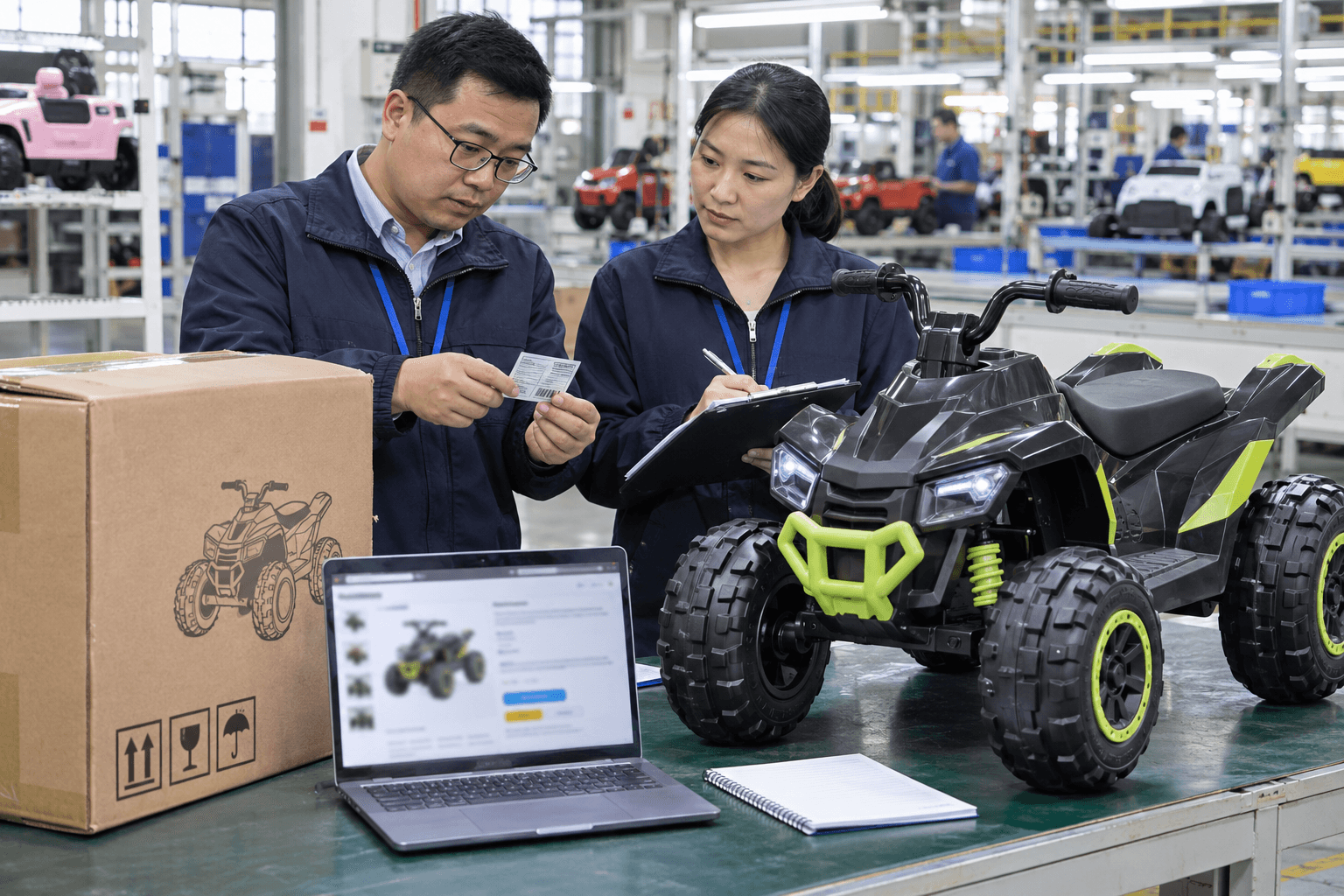
During shipment inspection, photograph sampled product identifiers, responsible-person details, warnings and carton marks. Compare these with the released listing pack and technical file. Correct mismatches before inventory is made available online.
What to confirm before approval
- Map listing SKU to physical model and batch.
- Inspect product, carton and digital identity together.
- Control variant and bundle coverage.
5. Prepare complaints, accidents and corrective-action records
Establish channels for consumers, retailers and service teams to report safety issues. Capture model, batch, event description, operating conditions, photographs, injury information where lawfully collected, and immediate containment. Safety signals should not disappear inside generic customer-service tickets.
Define who assesses reportability, communicates through official systems, contacts affected consumers and approves corrective action. Run a mock case before launch so the EU operator, importer, marketplace and factory know how to exchange evidence without delay.
What to confirm before approval
- Use safety-specific complaint categories.
- Define accident and authority escalation.
- Test consumer-contact and corrective-action workflows.
6. Keep GPSR information current after product changes
A battery, charger, controller, remote, label, manual, responsible party or supported claim change can affect more than one record. Use a change review to identify affected risk analysis, evidence, physical markings, listings, inventory, service parts and post-market files.
State the first affected batch and channel. Remove obsolete listing assets when the new configuration launches, and preserve enough historical information to identify units already sold. A current web page should not erase the record needed to investigate an older product.
What to confirm before approval
- Trigger review for product and operator changes.
- Link effective dates to batches and listings.
- Archive obsolete but traceability-relevant records.
7. Worked example: apply the decision to a real order
The following scenario is illustrative. It explains a decision method rather than reporting a CubRover customer project, measured test result, certification, or completed shipment.
A retailer prepares an EU listing using the factory address and model photograph but omits the EU responsible-person details and publishes an old warning panel. The physical cartons contain a newer label revision.
Before launch, the importer freezes the sellable SKU, confirms the responsible economic operator, issues a controlled online-offer pack, updates marketplace fields and checks sampled inventory against the listing and technical file.
The example shows why GPSR readiness is a linked data and operating process, not a single logo or downloadable certificate.
| Layer | Key question | Controlled output |
|---|---|---|
| Product | Which exact model and rules apply? | Applicability and risk record |
| Operator | Who is established and responsible in the EU? | Verified contact and role record |
| Online offer | What must appear before purchase? | Approved listing data pack |
| Post-market | How are incidents and recalls managed? | Complaint and corrective-action workflow |
Questions to include in the buyer decision brief
Convert the review into questions that the supplier can answer against one named model and order. The following prompts come from the topic-specific approval checks above. They are intentionally practical: each answer should identify the responsible party, supporting record, open condition, and date by which the buyer can make the next decision.
- Confirm how GPSR interacts with toy-specific requirements: Record the exact model and intended use. Separate GPSR duties from product-specific conformity duties. Name the reviewer and applicable-market assumptions.
- Identify the EU responsible person before listing: Confirm the responsible economic operator in writing. Approve exact postal and electronic contact details. Define document, incident and change responsibilities.
- Build an Article 19 online-offer data pack: Create one approved online-offer data sheet. Check manufacturer and responsible-person fields. Verify warnings remain visible on mobile and marketplaces.
- Connect listings to physical product traceability: Map listing SKU to physical model and batch. Inspect product, carton and digital identity together. Control variant and bundle coverage.
- Prepare complaints, accidents and corrective-action records: Use safety-specific complaint categories. Define accident and authority escalation. Test consumer-contact and corrective-action workflows.
- Keep GPSR information current after product changes: Trigger review for product and operator changes. Link effective dates to batches and listings. Archive obsolete but traceability-relevant records.

8. Turn the review into a controlled implementation plan
A useful buyer decision has three outputs: an approved requirement, evidence supporting that requirement, and a named person who can release the next activity. Keep these connected by model, configuration, market, document revision, and effective production date. If a supplier gives a conditional answer, preserve the condition in the purchasing record rather than shortening it into an unconditional product claim.
Maintain one EU market record per model and relevant variant. Link the technical file, responsible economic operator, physical label artwork, warnings, online listing data, language versions, channel publication log, shipment inspection and post-market contacts. Review it before each new market, reseller feed or material product change.
- Confirm product scope and applicable EU rules.
- Approve the EU responsible economic operator and contact data.
- Release the Article 19 online-offer pack.
- Inspect digital and physical traceability.
- Test the complaint and corrective-action workflow.
Primary resources for the specific source facts and frameworks discussed in this guide: EUR-Lex consolidated General Product Safety Regulation; European Commission GPSR business Q&A; European Commission toy market guidance.
Continue the related CubRover buyer workflow: EU kids ATV compliance guide; technical-file document index; retailer product-listing data guide.
9. Conclusion and buyer handoff
GPSR readiness depends on alignment. The responsible economic operator, technical file, physical identifiers, online offer, warnings and post-market process should all describe the same product and remain controlled after launch.
Before requesting a quote, share the destination market, selected product platform, target quantity, required configuration, channel, timing, and the decision you need the supplier to support. Attach the current requirement and identify open questions. This gives the factory a clear starting point for discussing samples, evidence, inspection, documents, packaging, and commercial responsibilities.
Frequently asked questions
Does GPSR replace CE marking for a kids ATV?
No. GPSR works alongside applicable product-specific EU legislation and does not replace required conformity assessment or CE marking.
Does an online listing need the manufacturer address?
Article 19 requires clear manufacturer contact information, plus responsible-person information when the manufacturer is outside the EU.
Can the importer be the EU responsible person?
It may be the responsible economic operator depending on the supply arrangement and applicable law; confirm and document the role.
Should warnings appear online?
Applicable warning or safety information should be clearly visible in the distance-sales offer in the required language context.
What should be checked during shipment inspection?
Model identity, batch, operator details, warnings, manual, carton marks and their consistency with the approved listing pack.
When should the GPSR record be updated?
After relevant product, operator, label, warning, channel or market changes and before the affected batch is offered.
Build an EU-ready kids ATV program
Ask CubRover about model identity, labels, packaging, inspection and document coordination for your target EU channels.
Get a Quote