The short answer
For a Canadian kids ATV program, confirm the product classification and intended age group, review the Canada Consumer Product Safety Act and Toys Regulations requirements that apply to the exact product, control battery access and ride-on stability risks, and prepare compliant product and packaging information. Mandatory consumer label information may require English and French, with additional Quebec language considerations. Use qualified Canadian advice for the final model and market.
Canadian market preparation is not a matter of replacing a U.S. address with a Canadian one. Product scope, bilingual information, age grading, battery construction, ride-on stability, traceability and provincial language requirements need a coordinated review.
A factory can help prepare samples and artwork, but the Canadian importer remains responsible for understanding the applicable obligations. This guide focuses on the buyer process: identify the exact product, obtain current evidence, approve language and verify production.
1. Define the product, age grading and Canadian sales scope
Record the intended rider age, abilities, load, speed, controls, surfaces and supervision. Review whether the product is a toy or another regulated product under Canadian law. Do not use a foreign age label as the complete Canadian assessment.
List the provinces and channels where the product will be sold. Quebec can introduce additional French-language considerations, and online listings should be reviewed alongside physical packaging and instructions.
What to confirm before approval
- Confirm product classification and intended user.
- List provinces and sales channels.
- Record the current regulatory review.
2. Map applicable toy-safety hazards and evidence
Review mechanical, electrical, chemical, flammability and other applicable requirements for the exact configuration. For a battery-powered ride-on, pay particular attention to accessible parts, battery compartments, wiring, charging, foreseeable use, stability and assembly.
Use qualified laboratories and specialists to define the assessment plan. Compare the tested sample with production materials, components, dimensions, labels and instructions. A generic supplier declaration should not replace model-specific evidence.
What to confirm before approval
- Create an applicable-requirement matrix.
- Identify the exact assessed sample.
- Connect evidence to production controls.
3. Plan English-French consumer information early
Identify mandatory label information, warnings, net quantity or identity statements where relevant, instructions and other consumer-facing content that requires language review. Translate meaning through qualified reviewers; do not translate isolated words without the product context.
Build a bilingual terminology sheet for the product, controls, battery, charger, assembly, warnings and service parts. Control line breaks and minimum readable size on actual labels and cartons, not only on a large design screen.
What to confirm before approval
- Identify mandatory bilingual content.
- Use controlled terminology and qualified review.
- Proof the actual printed size and placement.
4. Control battery, charger and adult-use information
Confirm battery chemistry, enclosure, access, retention, connector, polarity, charger compatibility and adult charging instructions. Determine which fasteners or tools are required and whether foreseeable impacts, pulling or dropping can release hazardous parts.
The manual and labels should state safe charging, storage, inspection and stop-use conditions appropriate to the approved product. Do not encourage substitute chargers or customer opening of sealed electrical components.
What to confirm before approval
- Approve the battery and charger as a system.
- Verify compartment security and wiring.
- Provide clear adult charging information.
5. Build importer records and production traceability
Maintain supplier, model, production date, factory, batch, purchase, test evidence, artwork and shipment records. Use a durable model and batch reference on product and packaging so complaints and corrective actions can be scoped.
Agree how the importer will receive change notifications and retain records. A new pigment, battery, charger, wire, label or supplier can affect evidence even when the sales model name stays unchanged.
What to confirm before approval
- Assign model and batch codes.
- Retain supplier and shipment records.
- Require review of compliance-relevant changes.
6. Inspect Canadian artwork and configuration before shipment
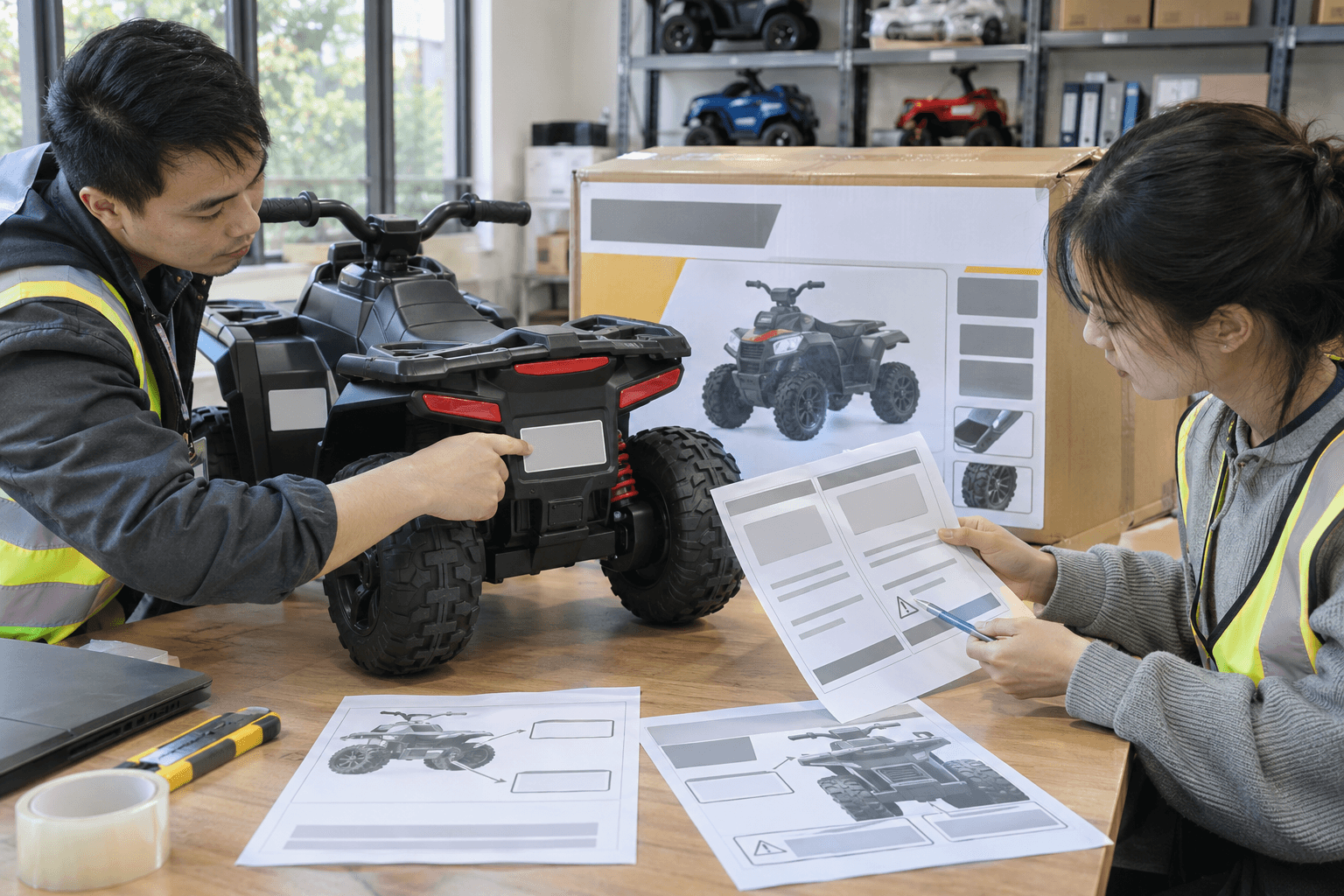
Sample finished products and cartons for model, age information, bilingual warnings, importer details where required, battery and charger identity, manual revision, accessories and batch reference. Compare with the approved proof and technical file.
Review e-commerce images and descriptions at the same release gate. Product pages should not omit warnings, claim unsupported terrain or performance, or show accessories that are not included in the Canadian configuration.
What to confirm before approval
- Inspect physical bilingual content.
- Verify product, charger and manual revision.
- Align online claims with the delivered configuration.
7. Worked example: apply the decision to a real order
The following scenario is illustrative. It explains a decision method rather than reporting a CubRover customer project, measured test result, certification, or completed shipment.
A retailer approves an English carton and asks for French text immediately before printing. The translation does not match the controls in the manual, and one warning becomes too small after the second language is added.
The importer reopens the artwork, creates a controlled terminology sheet, reviews the applicable mandatory information, adjusts the layout and verifies printed proofs on the actual carton and product labels before mass production.
The example shows why bilingual compliance is an engineering and artwork process, not a final translation task.
| Layer | Key decision | Controlled record |
|---|---|---|
| Product | Classification and intended age | Market requirement matrix |
| Evidence | Applicable safety assessment | Model-specific reports |
| Language | English-French meaning and layout | Approved terminology and proofs |
| Traceability | Model, batch and importer records | Production and shipment file |
8. Turn the review into a controlled implementation plan
A useful buyer decision has three outputs: an approved requirement, evidence supporting that requirement, and a named person who can release the next activity. Keep these connected by model, configuration, market, document revision, and effective production date. If a supplier gives a conditional answer, preserve the condition in the purchasing record rather than shortening it into an unconditional product claim.
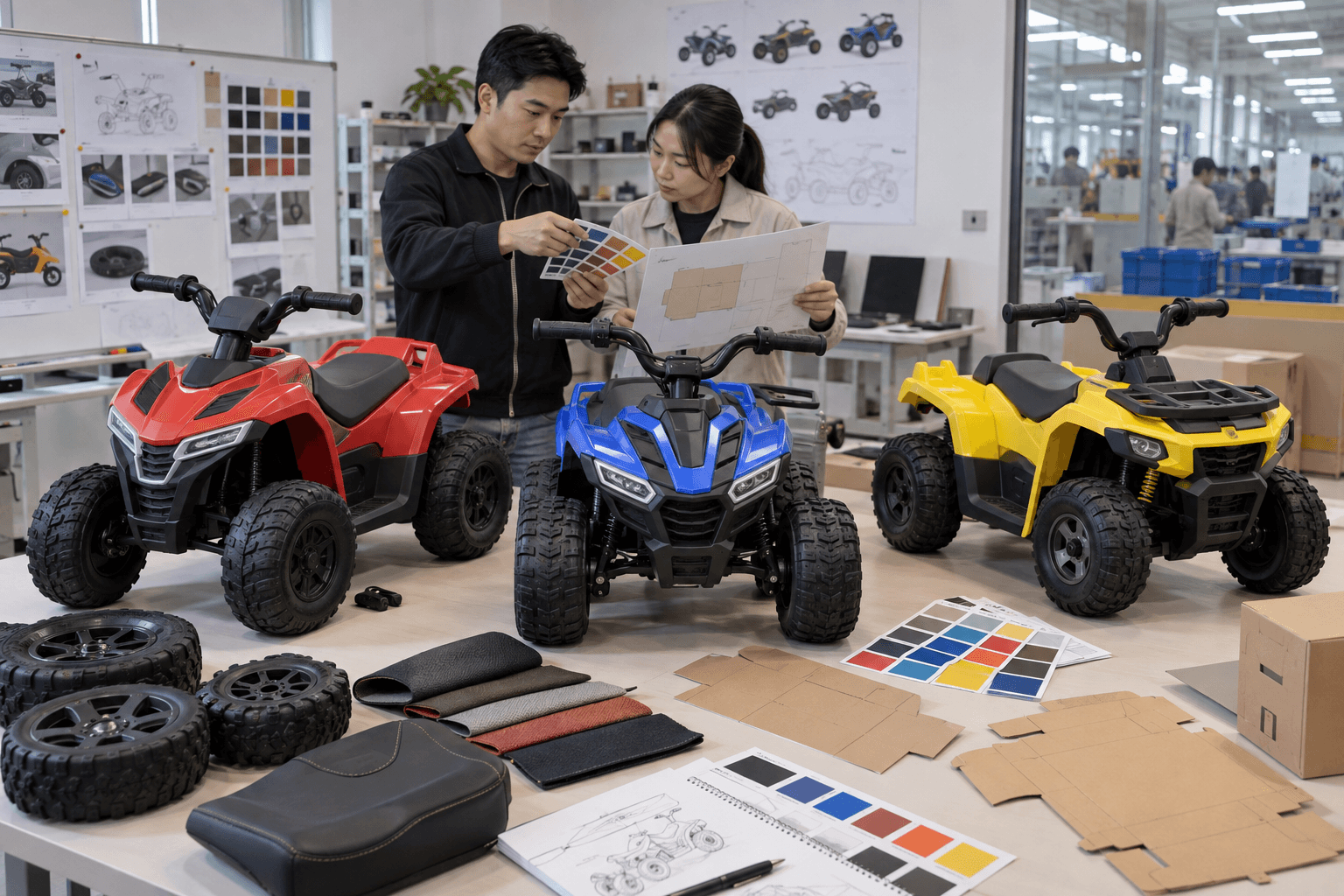
Create a Canadian market pack containing classification rationale, applicable-requirement matrix, exact product and charger specification, evidence index, bilingual terminology, warning and manual artwork, product and carton identifiers, provincial review, online content and shipment inspection criteria.
- Define the product and Canadian sales scope.
- Map applicable safety and evidence needs.
- Approve bilingual labels, warnings and instructions.
- Freeze battery, charger and traceability records.
- Inspect finished products, cartons and online content.
Primary resources for the specific source facts and frameworks discussed in this guide: Health Canada toy-safety industry guide; Canada consumer packaging and labelling guide.
Continue the related CubRover buyer workflow: children’s electric ATV compliance checklist; warning-label requirements guide; technical-file document index.
9. Conclusion and buyer handoff
Canadian readiness connects product safety, bilingual communication and traceability. Define the exact model, review current requirements, approve translations in context and inspect the production configuration before it ships.
Before requesting a quote, share the destination market, selected product platform, target quantity, required configuration, channel, timing, and the decision you need the supplier to support. Attach the current requirement and identify open questions. This gives the factory a clear starting point for discussing samples, evidence, inspection, documents, packaging, and commercial responsibilities.
Frequently asked questions
Do kids ATV packages in Canada need English and French?
Mandatory consumer label information is generally subject to bilingual requirements, with scope and exceptions requiring current review.
Does Quebec have additional language requirements?
It can. Include the intended provinces in the legal and artwork review.
Can a U.S. test report be used in Canada?
It may provide useful evidence, but Canadian applicability, standards, scope and product identity must be reviewed.
What battery points should buyers check?
Chemistry, enclosure, access, retention, wiring, connector, charger compatibility, adult-use information and foreseeable abuse.
Should online listings be included in compliance review?
Yes. Claims, warnings, images, included items and age information should match the approved Canadian configuration.
What production records should importers retain?
Supplier, model, batch, factory, dates, evidence, artwork, changes, inspections and shipment identifiers.
Build a Canada-ready kids ATV specification
Discuss bilingual packaging, product configuration and importer evidence with CubRover.
Ask for Product Catalog