The short answer
An electric kids ATV sold in the EU can create separate producer-responsibility workstreams for electrical and electronic equipment, batteries and packaging. The obligated party and registration process can vary by country and sales model. Before launch, map who first places each product and packaging stream on each national market, collect weight and material data, confirm markings and consumer information, register where required, and preserve sales and reporting records.
EPR is not one universal EU certificate. A single boxed electric ride-on can contain an electrical product, one or more batteries and several packaging materials, while national registration and producer-responsibility organizations still play important roles.
Factories provide essential BOM, weight, battery and packaging data, but the importer, brand owner or remote seller must determine its own legal obligations. The practical goal is to connect product master data with the entities and countries that place it on the market.
1. Separate the three producer-responsibility streams
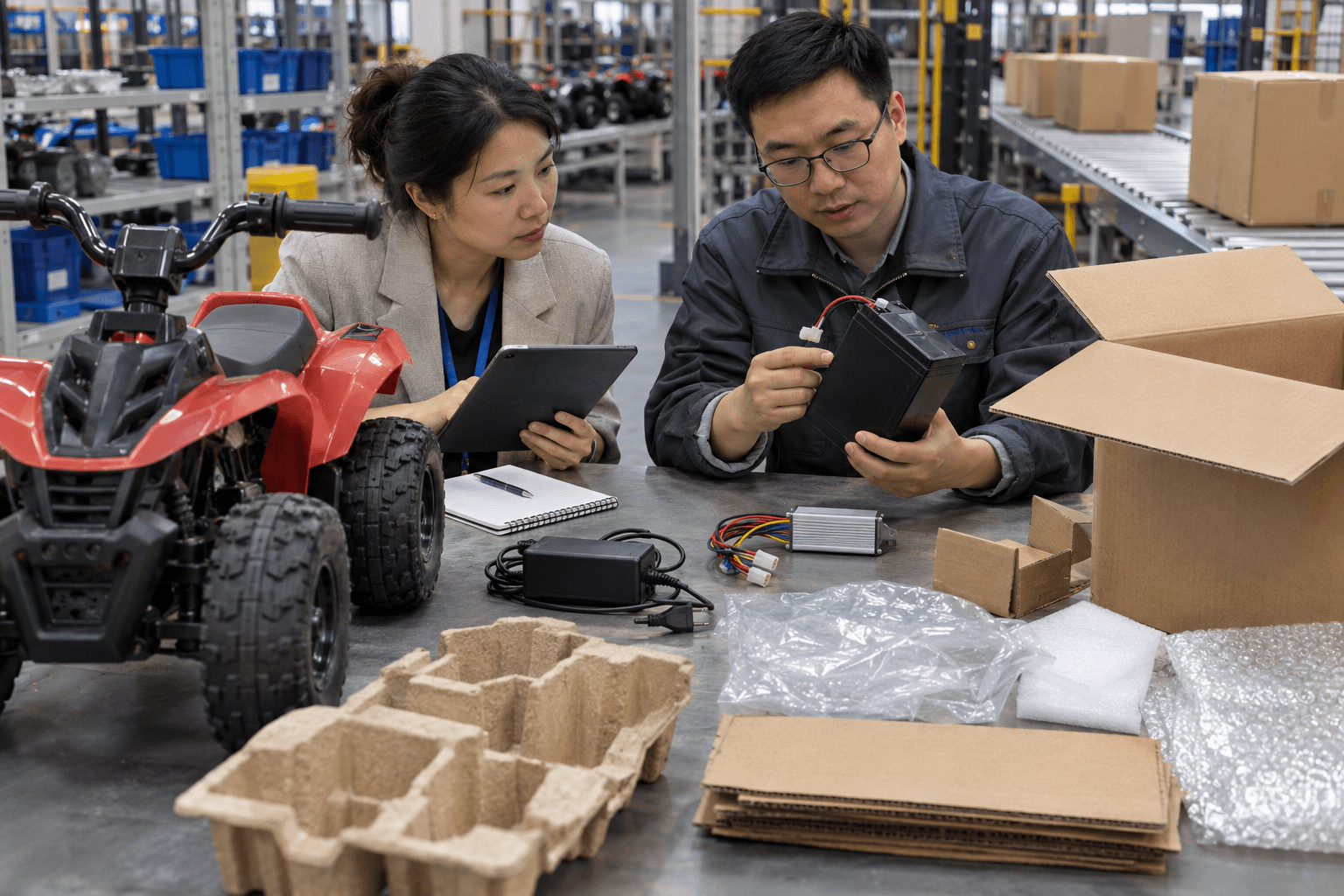
Map the complete sellable pack: vehicle electronics, installed traction battery, remote-control battery where present, charger, accessories, retail carton, protective inserts, bags, cable ties and documentation. Determine which streams fall under WEEE, battery and packaging rules for each destination.
Do not assume one registration number covers everything. Create a matrix by country, legal seller, marketplace account and waste stream. Record uncertain scope questions for qualified local review before stock is offered.
What to confirm before approval
- List every product, battery and packaging component.
- Assign a potential EPR stream and country.
- Record the first placer and legal seller.
2. Identify the obligated producer for each country and channel
The party considered the producer can depend on establishment, brand, import and distance-selling arrangements. A distributor buying from a local importer may have a different role from a brand shipping directly from another country.
Document legal names, tax and registration identities, marketplace accounts, fulfilment locations and destination countries. Do not copy a supplier registration number onto your listing unless the scheme and supply chain allow that use.
What to confirm before approval
- Map legal entities to sales flows.
- Confirm national producer definitions.
- Control use of registration numbers by channel.
3. Build reportable product and packaging data
Create verified weights for the complete electrical product, batteries by chemistry and category, and packaging by material. Define whether weights include accessories, manuals, pallets or transport packaging according to the relevant reporting method.
Use production-representative samples and calibrated scales. Keep the calculation sheet, photographs, BOM revision and packaging specification. When carton or battery design changes, update the data before the new batch enters reporting.
What to confirm before approval
- Measure rather than estimate critical weights.
- Separate battery chemistry and packaging materials.
- Link data to model and effective batch.
4. Coordinate symbols, labels and consumer information
Review applicable crossed-out wheeled-bin, battery, chemistry, producer, recycling and packaging information requirements with qualified specialists. Confirm placement, dimensions, durability and language. Avoid adding symbols simply because they appeared on another product.
The product, battery, charger, carton, manual and online listing may carry different information for different reasons. Maintain an artwork matrix showing the legal source, approved file and evidence supporting each mark.
What to confirm before approval
- Approve each symbol against an applicable requirement.
- Control artwork by product component.
- Verify legibility and durability on production units.
5. Plan registration, schemes, reporting and fees
Before sales begin, confirm national registers, producer-responsibility organizations, authorised-representative requirements where applicable, reporting periods, declarations and fee structures. Use current country-specific advice because implementation details can change.
Reconcile reported units and weights with sales, returns, transfers and stock movements. Assign owners in finance, compliance and operations so a marketplace request or filing deadline does not depend on one person’s spreadsheet.
What to confirm before approval
- Create a country registration calendar.
- Connect sales records to EPR reporting.
- Assign renewal, fee and evidence owners.
6. Write EPR data into supplier and change-control requirements
Include verified component weights, battery identity, packaging material specifications, artwork files and change notification in the purchase specification. Shipment inspection should confirm the approved battery, symbols and packaging configuration.
For repeat orders, review substitutions and weight changes. A cheaper insert, different battery or revised charger may affect reporting data and evidence even when the retail SKU remains unchanged.
What to confirm before approval
- Add EPR data fields to the product specification.
- Inspect markings and component identity.
- Trigger review after battery or packaging changes.
7. Worked example: apply the decision to a real order
The following scenario is illustrative. It explains a decision method rather than reporting a CubRover customer project, measured test result, certification, or completed shipment.
A brand launches the same electric quad in three EU countries using one carton. The factory supplies total carton weight but cannot separate the vehicle, battery, paperboard and plastic components, and the marketplace requests registration evidence.
The importer builds a country and entity matrix, weighs a production-representative pack, separates material data, confirms national registrations and updates the purchasing specification so future battery and packaging changes trigger review.
The useful output is not a generic EPR declaration; it is traceable data connected to the actual seller, country and product batch.
| Stream | Core factory data | Importer control |
|---|---|---|
| WEEE | Electrical product identity and weight | Producer registration and reporting |
| Batteries | Chemistry, category, count and weight | Battery obligations and records |
| Packaging | Material-by-material packaging weights | Country EPR registration and fees |
| Change control | Effective component and pack revision | Updated data before market placement |
Questions to include in the buyer decision brief
Convert the review into questions that the supplier can answer against one named model and order. The following prompts come from the topic-specific approval checks above. They are intentionally practical: each answer should identify the responsible party, supporting record, open condition, and date by which the buyer can make the next decision.
- Separate the three producer-responsibility streams: List every product, battery and packaging component. Assign a potential EPR stream and country. Record the first placer and legal seller.
- Identify the obligated producer for each country and channel: Map legal entities to sales flows. Confirm national producer definitions. Control use of registration numbers by channel.
- Build reportable product and packaging data: Measure rather than estimate critical weights. Separate battery chemistry and packaging materials. Link data to model and effective batch.
- Coordinate symbols, labels and consumer information: Approve each symbol against an applicable requirement. Control artwork by product component. Verify legibility and durability on production units.
- Plan registration, schemes, reporting and fees: Create a country registration calendar. Connect sales records to EPR reporting. Assign renewal, fee and evidence owners.
- Write EPR data into supplier and change-control requirements: Add EPR data fields to the product specification. Inspect markings and component identity. Trigger review after battery or packaging changes.

8. Turn the review into a controlled implementation plan
A useful buyer decision has three outputs: an approved requirement, evidence supporting that requirement, and a named person who can release the next activity. Keep these connected by model, configuration, market, document revision, and effective production date. If a supplier gives a conditional answer, preserve the condition in the purchasing record rather than shortening it into an unconditional product claim.
Create one EPR master sheet per sellable SKU and packaging configuration. Record legal seller, destination countries, WEEE identity and weight, every battery, packaging material weights, approved symbols, national registration references, reporting owner, data source and effective batch. Reconcile it with purchasing, marketplace and finance records.
- Map WEEE, battery and packaging streams.
- Identify the obligated entity in each market.
- Verify model and material weights.
- Complete registrations and artwork review.
- Connect repeat-order changes to reporting data.
Primary resources for the specific source facts and frameworks discussed in this guide: EUR-Lex EU Batteries Regulation; European Commission WEEE overview; European Commission packaging EPR guidance.
Continue the related CubRover buyer workflow: battery shipping compliance guide; private-label packaging and artwork guide; global market-entry compliance matrix.
9. Conclusion and buyer handoff
EPR readiness starts with correct product data but ends with country-specific registration and reporting by the right legal entity. Separate the waste streams, verify the weights and keep every change connected to the first affected batch.
Before requesting a quote, share the destination market, selected product platform, target quantity, required configuration, channel, timing, and the decision you need the supplier to support. Attach the current requirement and identify open questions. This gives the factory a clear starting point for discussing samples, evidence, inspection, documents, packaging, and commercial responsibilities.
Frequently asked questions
Does one EU EPR number cover every country?
Not generally. Registration and scheme obligations remain country- and stream-specific; confirm each selling route.
Does an electric kids ATV fall under WEEE?
It may, depending on classification and national implementation. Review the exact product and sales model with qualified specialists.
Are the vehicle battery and remote battery reported together?
They may have different battery identities or categories. Record every battery separately before applying the relevant reporting rules.
Who supplies packaging weights?
The factory can provide verified component data, but the obligated producer should define the reporting method and validate the record.
Do marketplaces ask for EPR registration?
Marketplace requirements vary and can change. Prepare valid entity- and country-specific evidence before listing.
When should EPR data be updated?
After relevant battery, electronics, accessory or packaging changes and before the affected units are placed on the market.
Plan an EU-ready electric quad program
Ask CubRover for model-specific battery, packaging, marking and production data for your compliance workflow.
Get a Quote