The short answer
A useful remote kids ATV factory audit combines a scheduled live site walk, buyer-selected samples and records, visible process flow, critical-component tracing, assembly and line-test demonstrations, quality and engineering questions, document review, limitations, and dated corrective actions. Record what was observed live, what was supplied separately, and what still needs on-site or independent verification.
Remote review can reduce the information gap before a sample or first order, especially when travel would delay a decision. Its value depends on what the buyer asks to see and whether the evidence can be connected to the selected model and site.
This guide covers a remote evidence-gathering session. It does not claim that a video call provides the same access, independence, or physical verification as an on-site audit.
1. Set the decision and scope before the call
Define whether the purpose is supplier qualification, model capability, production readiness, complaint follow-up, or shipment status. List the selected product, legal entity, site, planned processes, sample records, attendees, languages, time zone, internet needs, confidentiality, and permission to retain records.
Send an agenda but reserve room for buyer-selected observations. A supplier should prepare access and protect confidential customer information without scripting every answer. If the site is not producing the model that day, agree what can be observed and what evidence must be reviewed separately. Do not fill a genuine production gap with unrelated footage and label it current order evidence.
What to confirm before approval
- Name the site, model, purpose, and attendees.
- Agree recording and confidentiality conditions.
- Identify unavailable processes before the session.
2. Follow the physical process continuously
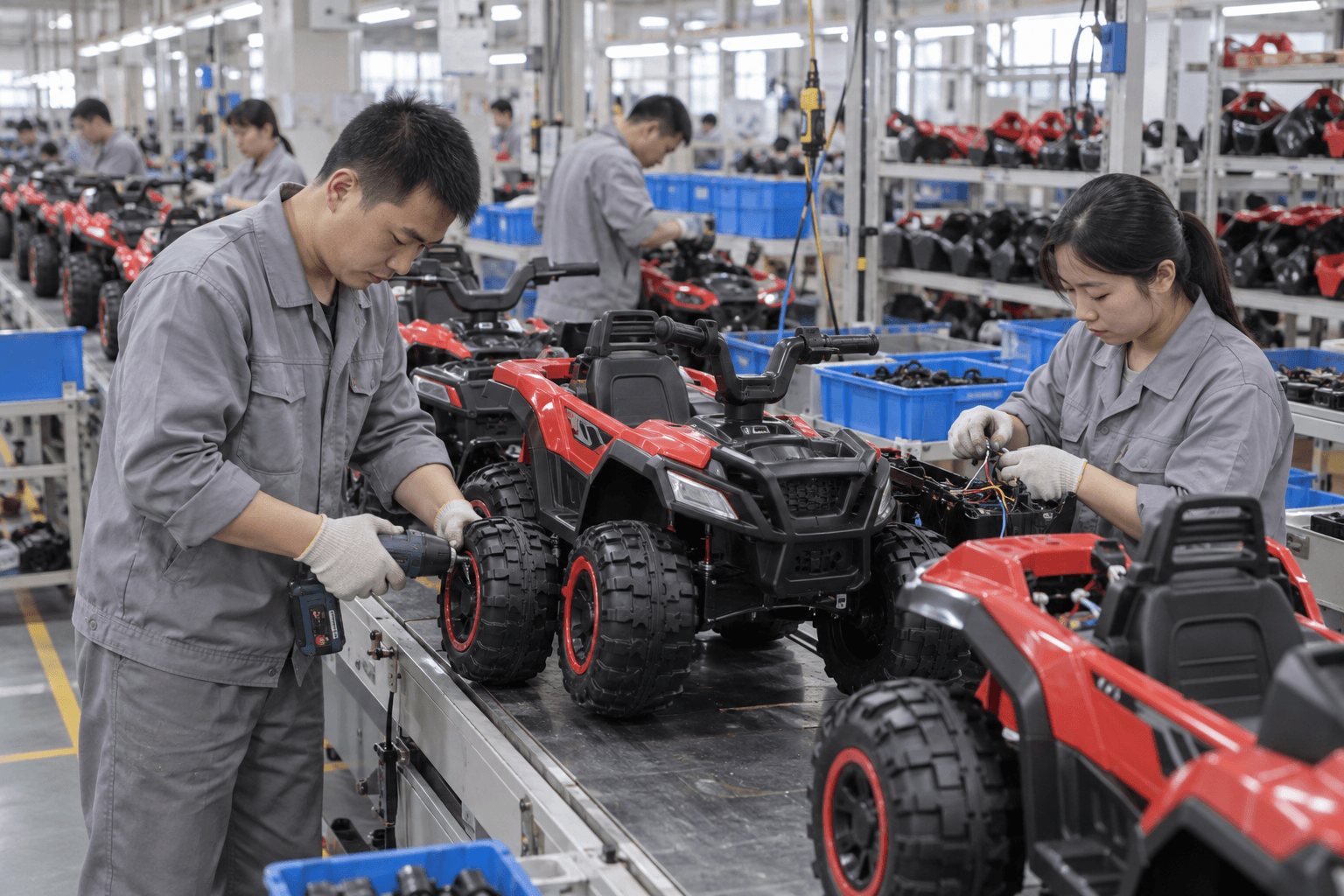
Start with location context and a site introduction, then follow incoming parts, storage, subassembly, assembly, testing, packing, finished goods, and loading as relevant. Ask the host to show the transitions and explain outsourced steps. A process map helps keep the walk coherent.
During the live session, request a reasonable change of view or a nearby station to connect the explanation with the physical setting. Network quality and worker privacy can limit views, so record those limits. The goal is verifiable context, not disruptive surprise demands. Promotional clips may explain capability but should be labeled as separate material rather than live observations.
What to confirm before approval
- Follow incoming-to-finished-goods flow.
- Identify owned and outsourced operations.
- Record live, historical, and unavailable evidence separately.
3. Select a model and trace critical components
Choose a finished or in-process unit and inspect its model, battery, charger, motor, gearbox, controller, wheels, manual, labels, and batch identity. Ask the team to connect one selected component to incoming stock and the approved specification.
This exercise tests whether the supplier can retrieve useful records without relying on general capability claims. A camera may not resolve small labels, so request clear photographs and documents after the call with the same sample identity. Avoid extrapolating from one selected unit to the whole lot; use it as a focused traceability demonstration and identify whether independent sampling is still required.
What to confirm before approval
- Choose a traceable unit or batch.
- Match parts to specifications and stock records.
- Retain clear follow-up photographs when needed.
4. Observe a complete test and its acceptance basis
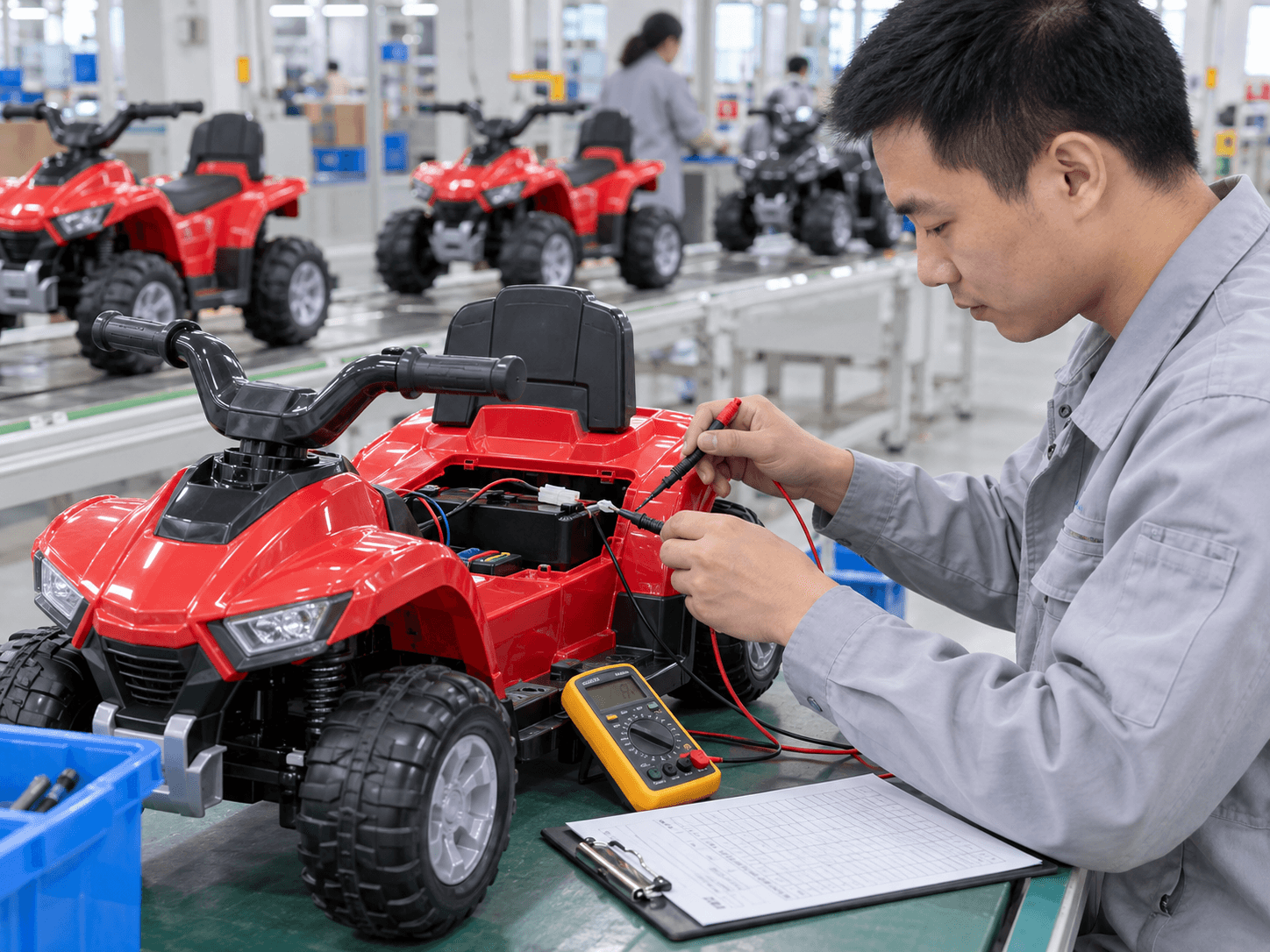
Ask an operator or quality person to explain the test method, sample selection, fixture, equipment status, acceptance criteria, result record, and failure handling. Observe the full sequence where safe, including how a failed unit is isolated and rechecked.
A vehicle moving forward on camera proves only that observed event. It does not establish loaded runtime, thermal performance, full stopping assessment, laboratory compliance, or every production unit’s behavior. Ask what is checked at incoming, in process, end of line, and engineering validation. This division reveals whether the factory understands the purpose and limits of each activity.
What to confirm before approval
- Observe the method and recorded result.
- Ask how failed units are controlled.
- Separate line function from engineering or laboratory tests.
5. Review records with the people who use them
Choose a few current work instructions, inspection records, component changes, defect examples, calibration references, and corrective actions. Ask how the record is created, who reviews it, and how it changes the next action. Keep customer-confidential details out of the retained file.
Involve engineering, quality, production, and export staff rather than relying only on sales. The same question across functions can reveal whether everyone uses the same revision. If a report is promised later, log it as pending with a responsible person and date. A verbal description of a process is useful context but should not be reported as a document that has been verified.
What to confirm before approval
- Use buyer-selected examples where practical.
- Check current revisions across functions.
- Assign dates for missing records and clarifications.
6. Report findings, limitations, and follow-up gates
Summarize observations, evidence, gaps, contradictions, and actions using the original review purpose. Distinguish capability questions, order-specific findings, quality-system concerns, and physical checks that the camera could not support. Provide a release recommendation only within that scope.
Follow up with document closure, samples, independent inspection, targeted on-site work, or a pilot order as appropriate. Verify corrective actions with records and physical evidence rather than accepting a short reply that an issue is fixed. Keep the remote review date visible, because staff, equipment, suppliers, and production mix can change before a later order is placed.
What to confirm before approval
- Attach evidence and limits to each finding.
- Set corrective-action owners and deadlines.
- Choose the next verification gate from actual gaps.
7. Worked example: apply the decision to a real order
The following scenario is illustrative. It explains a decision method rather than reporting a CubRover customer project, measured test result, certification, or completed shipment.
A buyer wants to verify a proposed 12V quad supplier before ordering samples. During the live walk, the line is assembling a different model. The host explains the common stations and shows the proposed model in the sample room.
The buyer records current line activity separately from sample capability. It selects the sample charger for tracing, requests its part record, observes a complete function-test demonstration, and asks quality staff to explain the incoming and final checks. A small label is unreadable over the video, so a photograph tied to the sample ID is logged as pending.
The review supports ordering a documented sample but does not prove readiness of a production lot that does not yet exist. Before the first shipment, the buyer still requires current order records and appropriate inspection. That limited, honest conclusion is more useful than a broad “factory passed” statement based on a call.
| Evidence | How to record it | Main limitation |
|---|---|---|
| Live process | Date, station, method observed | Restricted camera access |
| Selected sample | Model and physical identity | Not representative of every unit |
| Document | Original reference and revision | Authenticity and completeness need review |
| Pending item | Owner, due date, acceptance | Not verified until received |
Questions to include in the buyer decision brief
Convert the review into questions that the supplier can answer against one named model and order. The following prompts come from the topic-specific approval checks above. They are intentionally practical: each answer should identify the responsible party, supporting record, open condition, and date by which the buyer can make the next decision.
- Set the decision and scope before the call: Name the site, model, purpose, and attendees. Agree recording and confidentiality conditions. Identify unavailable processes before the session.
- Follow the physical process continuously: Follow incoming-to-finished-goods flow. Identify owned and outsourced operations. Record live, historical, and unavailable evidence separately.
- Select a model and trace critical components: Choose a traceable unit or batch. Match parts to specifications and stock records. Retain clear follow-up photographs when needed.
- Observe a complete test and its acceptance basis: Observe the method and recorded result. Ask how failed units are controlled. Separate line function from engineering or laboratory tests.
- Review records with the people who use them: Use buyer-selected examples where practical. Check current revisions across functions. Assign dates for missing records and clarifications.
- Report findings, limitations, and follow-up gates: Attach evidence and limits to each finding. Set corrective-action owners and deadlines. Choose the next verification gate from actual gaps.
8. Turn the review into a controlled implementation plan
A useful buyer decision has three outputs: an approved requirement, evidence supporting that requirement, and a named person who can release the next activity. Keep these connected by model, configuration, market, document revision, and effective production date. If a supplier gives a conditional answer, preserve the condition in the purchasing record rather than shortening it into an unconditional product claim.
For remote audits, retain a finding log that states evidence type and limitations. Only close findings after the missing record or physical verification is reviewed. If the session supports sample ordering rather than production approval, make that decision boundary clear in the purchasing file.
- Agree scope and access before the call.
- Trace a selected model through parts and records.
- Observe tests with acceptance criteria.
- Close missing evidence and corrective actions.
- Use samples or physical verification for remaining gaps.
Agree evidence and acceptance before work starts
Write the review method before the sample, factory testing, document check, shipment inspection, or service exercise takes place. Specify the reference, sample selection, conditions, tools, result format, acceptance boundary, and response to a failure. This makes two quotations or results comparable and prevents teams from negotiating the meaning of a pass after money and time have already been spent.
Keep a compact, traceable decision file
Retain the original requirement, dated supplier response, model and component identity, relevant photographs, calculations, reports, deviations, approvals, and release decision. A screenshot can help communication, but retain the underlying record when it matters to the decision. Distinguish a proposed target from a measured value, an engineering sample from a production reference, and an internal check from a third-party assessment.
Use one current revision where possible. Purchasing, engineering, compliance, quality, logistics, sales, and service may need different views of the information, but they should not be making decisions from different versions of the product. When a change is approved, state the first affected batch and what happens to old materials, inventory, artwork, service parts, customer instructions, and pending shipments.
Review cost and timing together with product application
The lowest visible unit price may shift cost into testing, rework, freight, storage, retail setup, support, returns, or obsolete parts. Compare the complete customer requirement and the cost of supplying it consistently. Where a number is uncertain, show the assumption and a reasonable scenario range. Do not turn an illustrative calculation into a supplier promise or a universal benchmark for the category.
Reserve time for unresolved items. A sample modification may require another review; a component change may affect evidence; a carton revision may alter loading; a late document can affect handoff. Put the owner and decision date beside each open item. A useful schedule makes these dependencies visible instead of reporting one finish date that assumes every preceding decision will happen immediately.
Close the loop after delivery
After the first shipment or implementation, compare the approved assumptions with arrival condition, assembly preparation, actual costs, receiving accuracy, customer questions, service cases, and repeat-order results. Separate an isolated event from a recurring pattern using model, batch, channel, and time in use. When a discrepancy appears, contain the affected scope, identify the cause, implement the correction, and verify the next relevant outcome.
Primary resources for the specific source facts and frameworks discussed in this guide: CPSC toy-safety business guidance.
Continue the related CubRover buyer workflow: factory audit and quality-control guide; sample approval guide; traceability guide.
9. Conclusion and buyer handoff
A remote audit is most useful when its evidence and limitations are visible. Follow the process, trace selected parts, observe complete tests, review current records, and set the next verification gate from what remains unresolved.
Before requesting a quote, share the destination market, selected product platform, target quantity, required configuration, channel, timing, and the decision you need the supplier to support. Attach the current requirement and identify open questions. This gives the factory a clear starting point for discussing samples, evidence, inspection, documents, packaging, and commercial responsibilities.
Frequently asked questions
Can video replace an on-site factory audit?
It can support selected decisions, but access, independence, physical measurement, and sampling limits must be recognized.
Should the factory receive an agenda?
Yes. Agree access and confidentiality, while retaining buyer-selected observations and record examples.
What if the selected model is not on the line?
Record that limitation and distinguish current process capability from sample or historical evidence.
Can an unreadable label be accepted verbally?
Log it as pending and obtain clear evidence tied to the selected sample or batch.
Who should attend from the factory?
Relevant sales, engineering, quality, production, and logistics personnel should answer within their responsibilities.
How are corrective actions closed remotely?
Review dated records and physical evidence, and require independent or on-site verification where the gap cannot be resolved remotely.
Request evidence tied to your exact model
Share the decision you need a factory review to support and the product configuration under consideration.
Send Your Requirements