The short answer
For a kids ATV imported into the United States, determine the country of origin using the applicable customs rules and mark the article—or permitted container exception—conspicuously, legibly, indelibly and permanently as required for the ultimate purchaser. Keep origin marking distinct from brand or importer addresses. Any “Made in USA,” “Assembled in USA” or similar advertising claim needs separate, truthful substantiation and must not conflict with customs marking.
Private-label artwork can easily create origin confusion. A U.S. company address, flag-inspired design or “designed in” statement may sit near the legally required foreign-origin mark, while the product and carton use different wording.
Customs marking and advertising claims are related but not identical. CBP determines imported-article origin and marking; the FTC evaluates U.S.-origin advertising claims and the overall impression they create.
1. Determine origin from the actual manufacturing facts
Document where the frame, molded body, wiring, motors, battery, charger and final assembly are produced, and where any later processing occurs. Origin is a legal determination, not the location of the brand owner, warehouse or design team.
If the answer is uncertain, review relevant CBP rulings and seek a binding ruling or qualified customs advice before mass-printing labels. A supplier statement can provide facts but does not replace the importer’s reasonable care.
What to confirm before approval
- Map materials and manufacturing operations.
- Review relevant customs rules and rulings.
- Resolve uncertainty before artwork release.
2. Design a conspicuous and durable origin mark
Select the product location, wording, method, size and permanence for the ultimate purchaser. Consider whether the label remains visible after assembly and whether retail packaging is opened before sale. Use English country naming appropriate to the determination.
Test printed, molded or applied marks for adhesion, abrasion and legibility. Do not place origin only on a removable transport document when the article itself must be marked.
What to confirm before approval
- Approve exact wording and location.
- Verify permanence and legibility.
- Check visibility in the retail sales condition.
3. Align product, retail carton and outer shipping marks
The retail carton, master carton and product may require or carry different information, but they should not contradict. Confirm any exception that allows container marking instead of article marking before relying on it.
Separate origin from shipping marks, importer address, brand owner, responsible party and manufacturer identity. Use an artwork matrix so each line has a legal or operational purpose and approved source.
What to confirm before approval
- Confirm article versus container requirements.
- Reconcile every packaging level.
- Separate origin from business contact identities.
4. Substantiate Made in and Assembled in advertising
An unqualified Made in USA claim is held to the FTC “all or virtually all” standard. An assembled or qualified claim must accurately describe substantial U.S. work and imported content without implying more domestic manufacture than the facts support.
Review product pages, marketplace titles, packaging, flags, maps, videos, social posts and dealer content together. The net impression can create an implied origin claim even when no exact phrase appears.
What to confirm before approval
- Document support before making the claim.
- Review express and implied origin messages.
- Keep digital claims consistent with physical marking.
5. Give the factory a controlled origin-artwork specification
Provide approved product label, carton and manual files with exact wording, location and effective SKU. Prevent the factory from reusing another customer’s origin label or adding the importer address as a substitute.
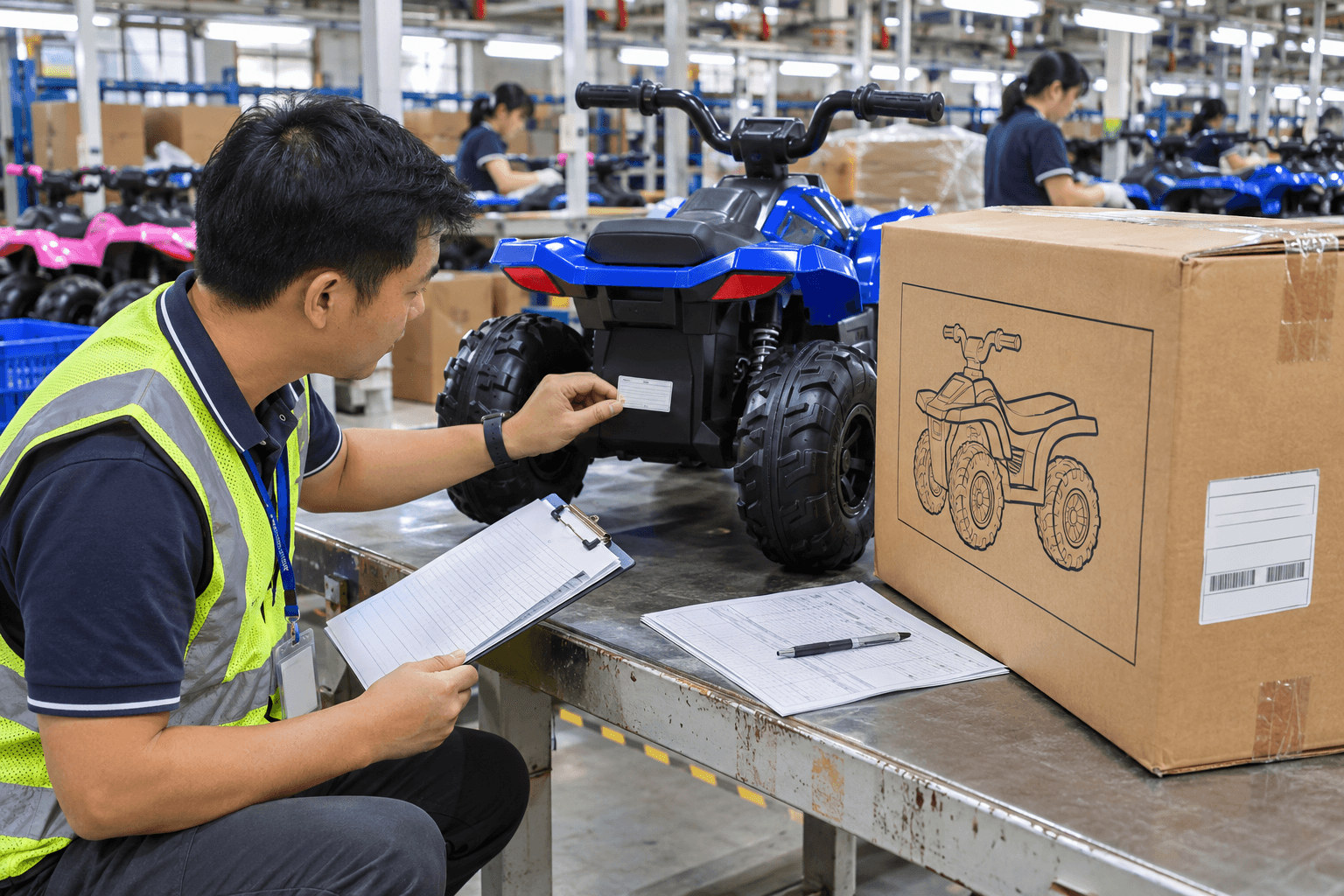
During pre-production and shipment inspection, compare sampled product and carton marks to the master. Record model, batch, label revision and photographs; quarantine mixed or missing marks.
What to confirm before approval
- Release controlled label masters.
- Inspect product and carton together.
- Prevent mixed artwork and undocumented relabeling.
6. Review origin after sourcing or processing changes
A change in final assembly location, major component sourcing or post-import processing may affect origin analysis or claims. Trigger review before describing a new supply route as equivalent to the approved one.
Preserve BOM, purchase, production and shipping evidence supporting the determination. If products are repacked or relabeled after import, control the process so required marks are not removed or obscured.
What to confirm before approval
- Trigger review for country and process changes.
- Retain manufacturing and import evidence.
- Protect marking during repacking and fulfillment.
7. Worked example: apply the decision to a real order
The following scenario is illustrative. It explains a decision method rather than reporting a CubRover customer project, measured test result, certification, or completed shipment.
A U.S. private-label brand imports a finished electric quad from China and adds the battery and decals in a domestic warehouse. Marketing proposes “Assembled in USA,” while the product label shows only the U.S. brand address.
The importer documents the manufacturing facts, obtains customs and advertising advice, applies the required origin marking, and revises the marketing claim to language supported by the actual processing rather than the desired brand impression.
The example illustrates why warehouse finishing does not automatically support a domestic-origin claim.
| Information | Purpose | Control owner |
|---|---|---|
| Country of origin | Inform ultimate purchaser and customs compliance | Importer and customs adviser |
| Brand address | Identify brand or contact party | Brand and compliance team |
| Shipping mark | Route and receive cartons | Logistics team |
| Made in claim | Marketing representation | Brand with legal substantiation |
Questions to include in the buyer decision brief
Convert the review into questions that the supplier can answer against one named model and order. The following prompts come from the topic-specific approval checks above. They are intentionally practical: each answer should identify the responsible party, supporting record, open condition, and date by which the buyer can make the next decision.
- Determine origin from the actual manufacturing facts: Map materials and manufacturing operations. Review relevant customs rules and rulings. Resolve uncertainty before artwork release.
- Design a conspicuous and durable origin mark: Approve exact wording and location. Verify permanence and legibility. Check visibility in the retail sales condition.
- Align product, retail carton and outer shipping marks: Confirm article versus container requirements. Reconcile every packaging level. Separate origin from business contact identities.
- Substantiate Made in and Assembled in advertising: Document support before making the claim. Review express and implied origin messages. Keep digital claims consistent with physical marking.
- Give the factory a controlled origin-artwork specification: Release controlled label masters. Inspect product and carton together. Prevent mixed artwork and undocumented relabeling.
- Review origin after sourcing or processing changes: Trigger review for country and process changes. Retain manufacturing and import evidence. Protect marking during repacking and fulfillment.

8. Turn the review into a controlled implementation plan
A useful buyer decision has three outputs: an approved requirement, evidence supporting that requirement, and a named person who can release the next activity. Keep these connected by model, configuration, market, document revision, and effective production date. If a supplier gives a conditional answer, preserve the condition in the purchasing record rather than shortening it into an unconditional product claim.
Maintain an origin and marking file by SKU. Include manufacturing facts, origin determination and advice, label and carton artwork, durability review, online claim substantiation, first effective batch, inspection photographs, customs entry references and change triggers. Use the same approved wording across product, pack and channel where their purposes overlap.
- Document manufacturing and processing facts.
- Confirm origin and article-marking requirements.
- Approve product and packaging artwork.
- Substantiate every express or implied origin claim.
- Inspect production and review sourcing changes.
Primary resources for the specific source facts and frameworks discussed in this guide: CBP import requirements and country-of-origin marking; CBP binding rulings program guide; FTC Made in USA compliance guide; FTC advertising FAQs for businesses.
Continue the related CubRover buyer workflow: HS code and customs-document guide; shipping marks and logistics-label guide; e-commerce assets and returns guide.
9. Conclusion and buyer handoff
Origin marking should reflect the legal manufacturing facts, while marketing claims must reflect the message consumers receive. Control both before printing and revisit them whenever the sourcing or processing route changes.
Before requesting a quote, share the destination market, selected product platform, target quantity, required configuration, channel, timing, and the decision you need the supplier to support. Attach the current requirement and identify open questions. This gives the factory a clear starting point for discussing samples, evidence, inspection, documents, packaging, and commercial responsibilities.
Frequently asked questions
Does a U.S. company address mean the product is made in the USA?
No. A business address identifies a party; it does not determine product origin.
Can the retail carton be marked instead of the kids ATV?
Only where an applicable marking exception permits it. Confirm the exact sales condition and legal basis.
Is Designed in USA the same as Made in USA?
No. A design claim should be truthful, specific and should not imply unsupported domestic manufacture.
Can simple U.S. assembly support an Assembled in USA claim?
Not automatically. The FTC considers whether principal assembly and substantial transformation support the claim.
What should factory inspection verify?
Exact origin wording, location, permanence, product and carton consistency, SKU, batch and absence of mixed labels.
When should the origin determination be reviewed?
After meaningful changes in manufacturing country, final assembly, components, processing or product configuration.
Control labels before production starts
Ask CubRover about private-label product marks, carton artwork, model identity and shipment inspection.
Get a Quote